- HOME
- About Me
Love Spain? Cook It
at Home With Reliable, Traditional Spanish Recipes
If you love Spain and ever come back from the country thinking, “I need
to eat that again,” you’re in the right place.
This page is here to show you who’s behind Spain in a Pan and to help you cook traditional Spanish recipes that are the real thing, even when you’re not cooking in Spain.
Think of Spain in a Pan as your insider’s guide
to its cuisine. Authentic dishes that real Spanish families actually make, not
necessarily what you find on tourist menus.
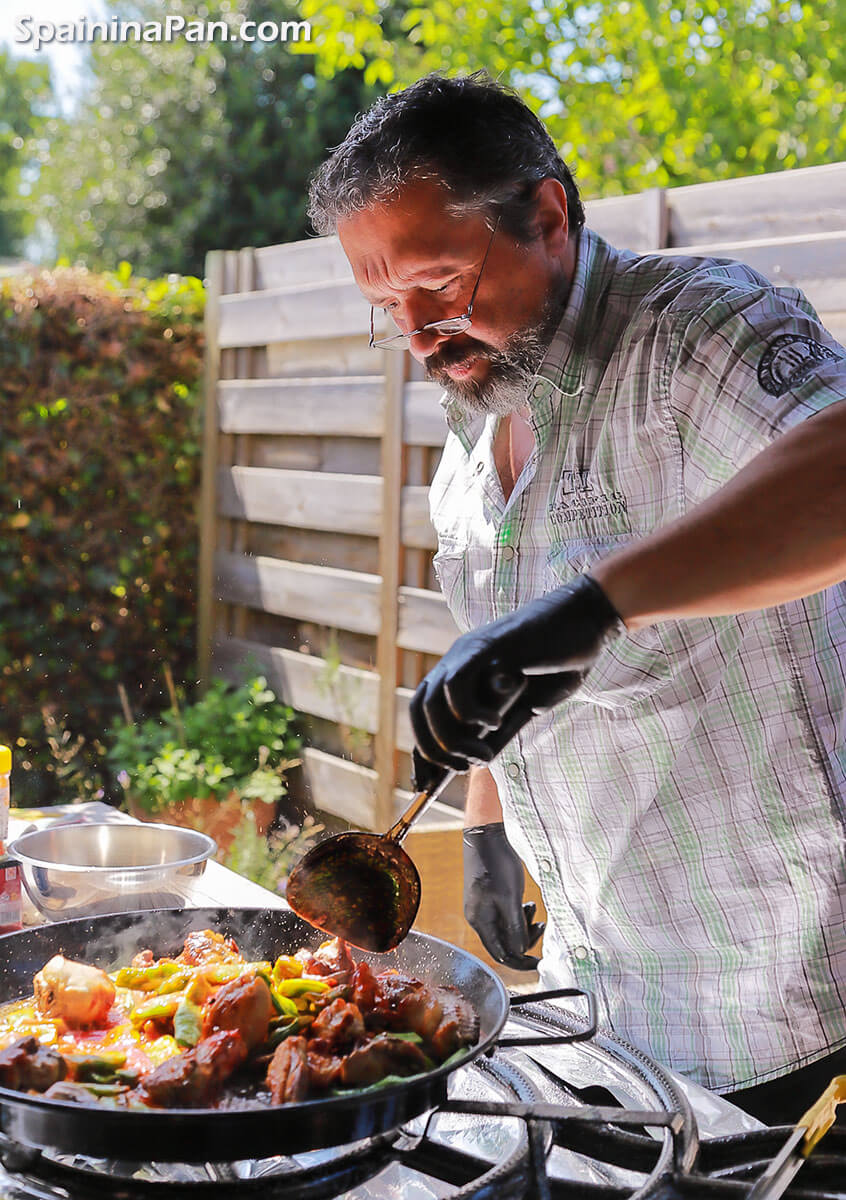 Preparing an authentic paella Valenciana.
 Preparing an authentic paella Valenciana.
Who
Is Spain in a Pan For?
Spain in a Pan is for people who love Spain, enjoy good food, and like
cooking with an adventurous hint.
I love hiking through Spanish villages and the countryside, and I’ve always been interested in the food and traditions I come across along the way.
The dishes you’ll find here are the kind of traditional food you might eat when you sit down at a Spanish family’s table.
Maybe you’ve had a delicious dish in Spain and thought, “I wonder what that was?” or “How do I make it?”
Not always, but sometimes, you may not find the exact ingredients where
you live. Nine times out of ten, though, I can tell you what makes a good
substitute, so you can still get close to the real thing.
Why I Created Spain in a Pan
My name is Edu Valor. I grew up between Spain and Belgium, and I’ve
always had both feet firmly planted in the food, places, and family culture of
Spain.
Spain is a diverse country with a dazzling variety of flavors. My family is spread across the country, from Seville in Andalucía to Valencia, Irun, and Madrid. My culinary influences were naturally widespread.
I learned early on how varied Spanish cuisine can be. It changes by season, by region, and sometimes simply by whatever you have in the refrigerator.
I created Spain in a Pan because I wanted more people to experience the real food of the country, when you eat as locals do.
Also, Spanish cuisine has gained worldwide recognition for its health benefits. Good food that is also healthy? I gladly share that with you!
A Little More About Me
I’ve been passionate about cooking Spanish food since I was a teenager.
I had a knack for it, much like my sisters. We were, and still are, competitive
when it comes to food.
To be honest, I don’t have formal training from a culinary school, much like some celebrity chefs.
What I do have is a lifetime of repetition, family learning, and real-world cooking for real people, with experience in CKD-friendly cooking.
I’m a long-time fan of Karlos Arguiñano and Enrique Sánchez—chefs who cook dishes that ordinary people can actually make at home, each with their own style.
I can sum up my experience like this:
- 35+ years of cooking experience.
- Cooking for my mother, including CKD-friendly meals where flavor still matters.
- Occasionally cooking at my sister Isabel’s restaurant, Pasión y Sabor.
- Being known among family and friends for classic dishes such as paella Valenciana, chicken paella, and pollo al ajillo.
My goal is simple: when you cook one of my
recipes, it should work, and it should taste like a genuine Spanish dish.
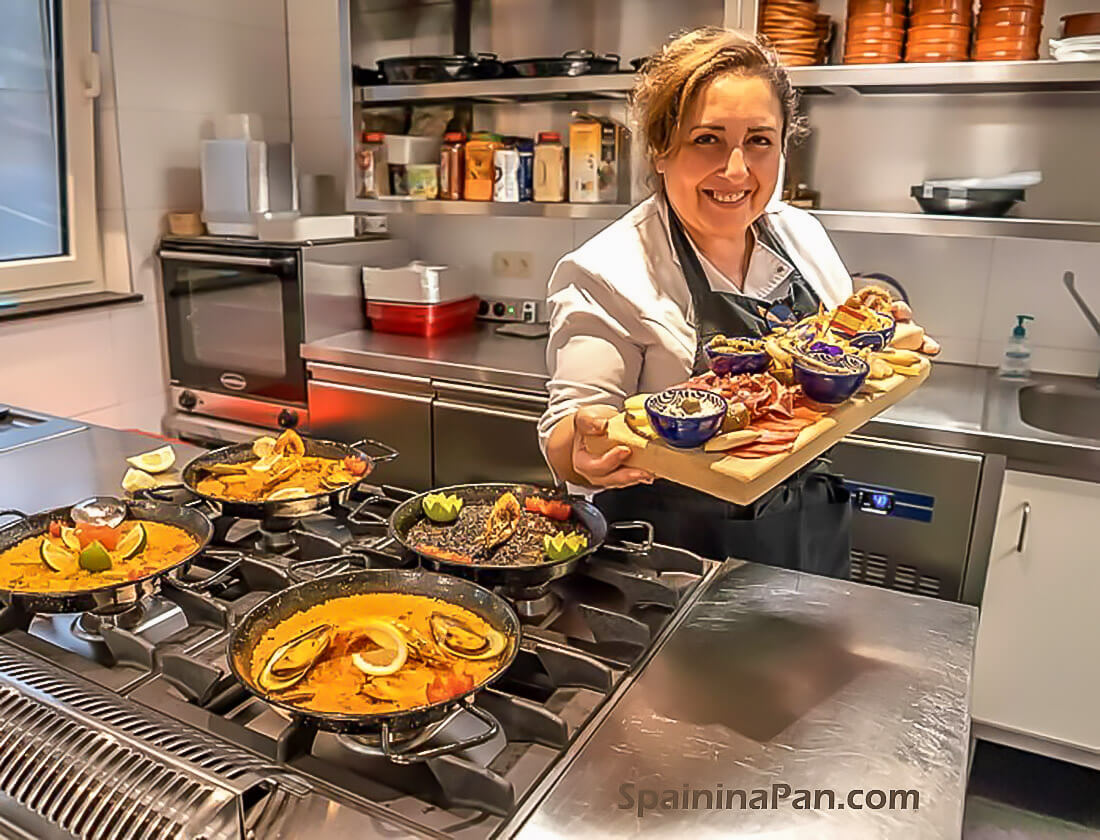 Isabel showing a mixed tapas tray.
 Isabel showing a mixed tapas tray.
What
You’ll Find Here (and How I Help)
On Spain in a Pan, you’ll find traditional Spanish recipes with a
practical, home-cook approach:
- Steps that don’t assume you already know what to do.
- Tips that explain the why, so you can repeat the result.
- Ingredient guidance, including substitutions when you can’t find something outside Spain.
- Dishes connected to regions and real Spanish food culture, so you understand what you’re cooking, not just what it’s called.
Whether you’re chasing the memory of a dish you ate on a trip or you simply love Spain and want to cook its food at home, I hope this site feels like a trusted kitchen companion.
If you have a dish from Spain and are trying to figure out what it is—or how to make it—send me a message. Contact me here.
Send me what you remember, or a photo if you have one, along with where you ate it, and I’ll do my best to point you in the right direction.
I’m also happy to help with ingredient substitutions outside Spain or questions about recipes you’re making from the site.
What I Learned About Flavor
Here’s something that changed the way I cook.
When I became my mother’s caregiver during her battle with CKD (Chronic Kidney Disease) and dialysis, we had to cook without salt and pre-boil certain vegetables.
With guidance from her dietitians, we created genuinely delicious meals, and I ate them myself. A shared sorrow is half a sorrow.
You’d be surprised how much flavor you can coax out of proper browning, lemon juice, vinegar, garlic, and fresh herbs.
I got creative and learned even more ways to enhance flavor. It’s part of the craft, whether you’re cooking with salt or without it.
In a restaurant, it’s a given that a dish is
tasted before being served. That’s a habit worth adopting at home, too.
Traveling Made Me a Better Person...and Cook!
You could say I’m well-traveled. I love trying new or unfamiliar foods.
There’s so much to learn from different kitchens.
I’ve cooked and eaten my way through the USA, Belgium, the Netherlands, Germany, France, and, of course, Spain.
The biggest surprise? The USA in 1996. What I
thought was the fast-food capital turned out to offer some incredible culinary
experiences.
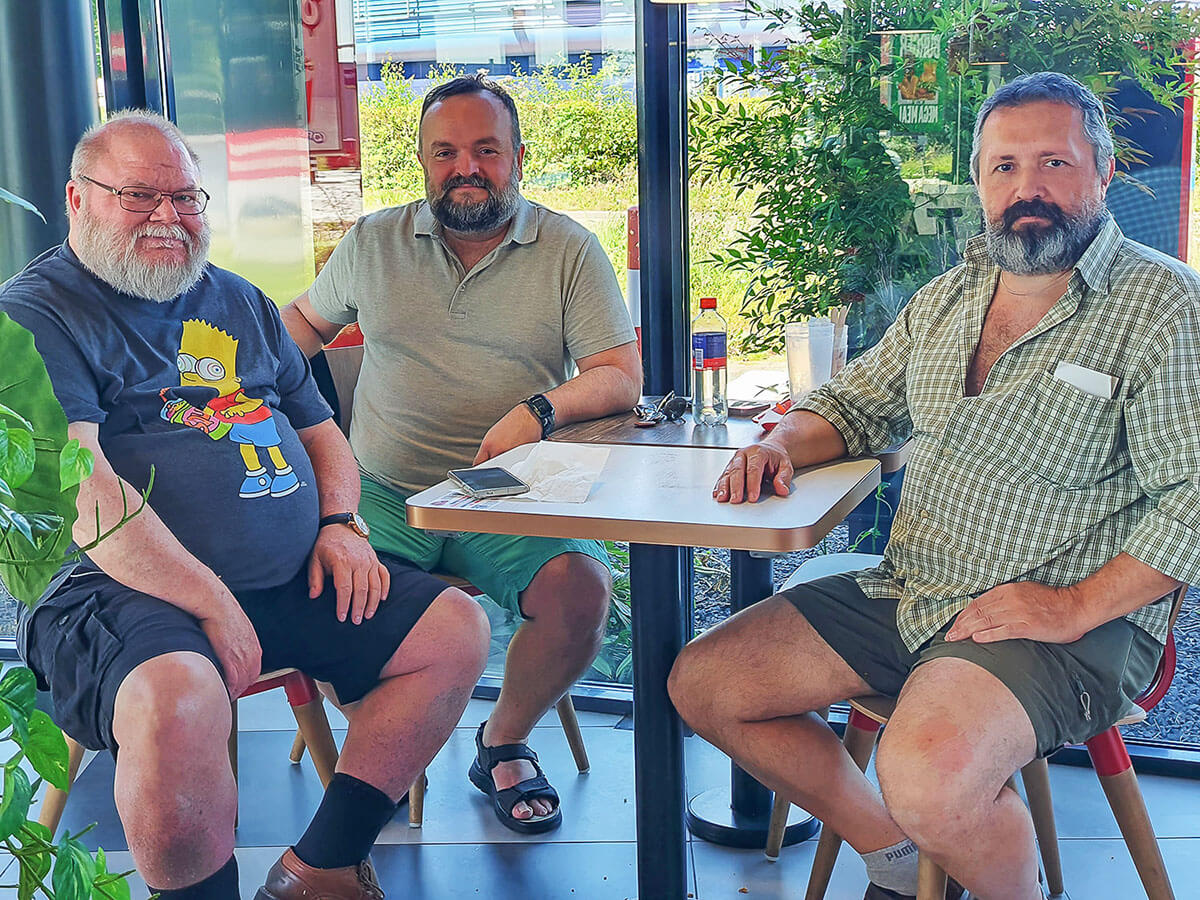 Tony from New Jersey, Saki, and I at KFC.
 Tony from New Jersey, Saki, and I at KFC.
Thanks to my friend Tony, I learned about slow cooking, proper
seasoning, and how temperature and timing affect proteins.
These experiences made me a better cook.
But here’s what traveling taught me, too: you don’t need complicated ingredients or fancy techniques to make great food. Simple, fresh ingredients and proper technique. That’s really all it takes.
Without getting into which cuisine is the best, I still gravitate toward Spanish food for the flavor, my personal history, and the way it fits the way I like to cook.
It’s home.
Your Turn to Explore Spain's Kitchen
My Spanish family traditions and decades of experience are right here at
your fingertips.
You’re just a few steps away from cooking authentic Spanish dishes—the ones Spaniards actually make, with stories and tips to help you succeed.
Take a look around. You might find a recipe you’ll want to make again and again.
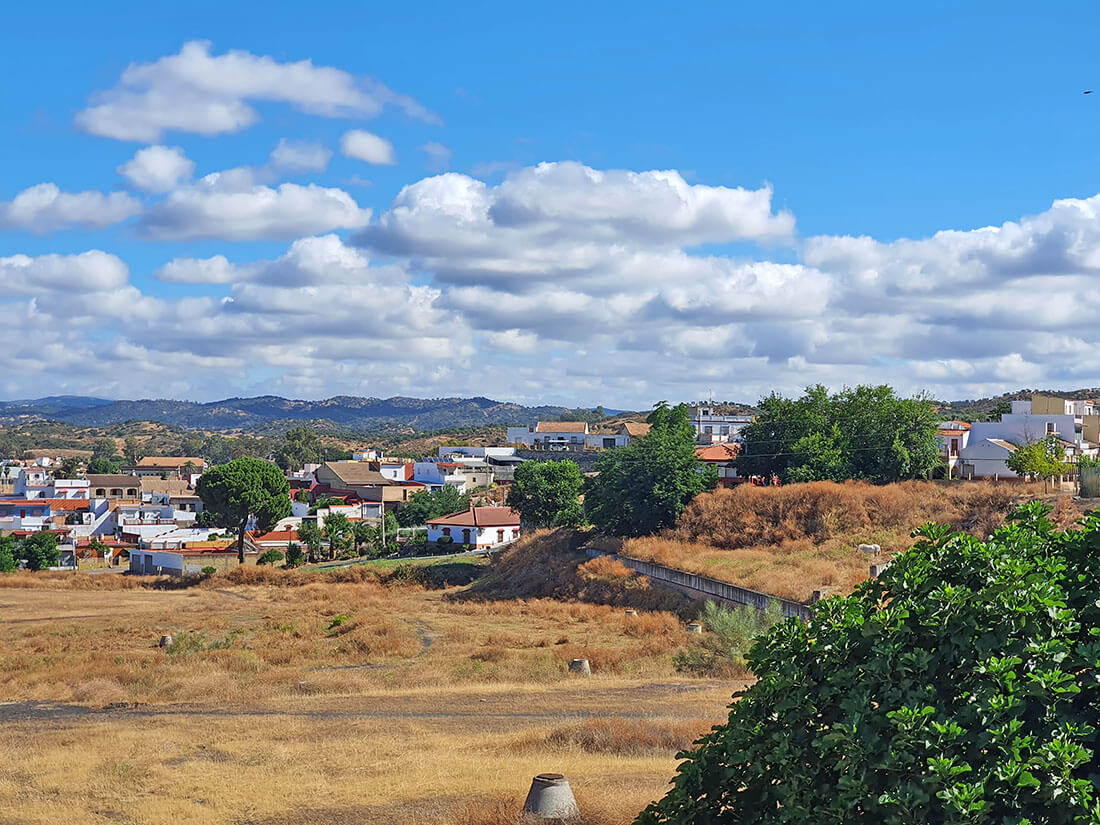 Villanueva del Rio y Minas, Andalusia. My parents' village, where it all began.
 Villanueva del Rio y Minas, Andalusia. My parents' village, where it all began.
If you like, start with a few of my most reliable Spanish recipes: Paella Valenciana, chicken paella, and pollo al ajillo.
Let’s bring the real Spain into your kitchen.
¡Buen provecho!
Edu Valor
*****