- HOME
- Paella Recipes
- Chicken Chorizo Paella
The Forbidden but Flavorful Chicken and Chorizo Paella Recipe
(Paella de Pollo y Chorizo)
By Edu Valor / Author - Spanish Chef
I'm not making myself popular in Spain with this recipe. In our family, we never made paella with chorizo. The chicken and chorizo paella is probably more popular outside of the country.
Valencians, in particular, don't like the overpowering taste of the sausage that can mask other flavors in the dish. In fact, traditional paella Valenciana follows a different philosophy where chorizo is clearly absent.
For probably the same reason, we never made this paella. It just didn't feel right or a natural paella ingredient. Chorizo is more of an embutido, a cold-cut, cured with paprika.
It's generally accepted that the rice taste should be a subtle mix of all the ingredients. Chorizo can be quite strongly tasting.
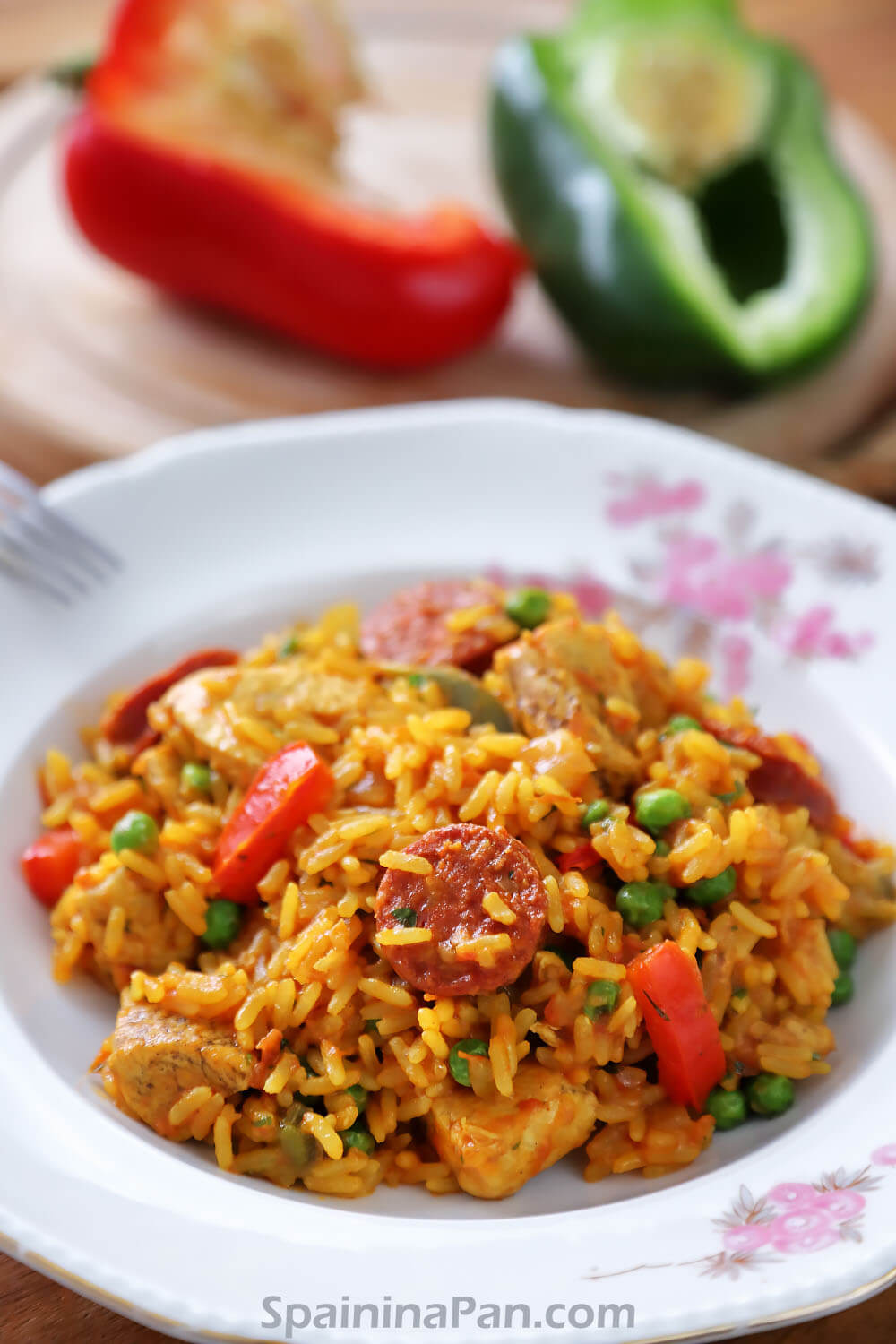 The unpopular chorizo paella.
 The unpopular chorizo paella.
Why is Chicken and Chorizo Paella Unpopular in Spain?
I like chorizo, and so do many other people in and outside Spain. The average Spaniard tends to have the sausage on its own in a bocadillo, as tapas, on a barbecue, or in a guiso.
The thing is, we never used it in paella. Neither did our Spanish acquaintances. It just didn't feel right, probably because we see it more as an embutido, a cold-cut.
On the other hand, the strong taste and texture make it less suitable. It's good with meat in a lentil soup, where its fat slowly flavors the broth.
But it never really integrates with the dish since the chorizo is usually eaten with the other meat as a second course.
Not done well, chorizo dominates, masking the saffron flavor and other condiments in paella. Saffron itself is quite delicate and expensive, and can easily be overshadowed.
We are more used to well-balanced, rustic, and natural dishes. A chorizo paella does feel touristy. People outside Spain seem to like this paella version.
Many culture-aware Valencians don't share the sentiment. They probably want to honour their paella rules too, which are informally laid out by local groups.
To some degree, I feel the same way, but mainly for the taste. It's just too prominent to allow a balanced rice dish.
Combined with the chicken, it provides a milder, absorbing base that flavors the broth, while chorizo contributes paprika-rich fat that spreads through the rice.
Let's Make a Chicken and Chorizo Paella!
Ingredients for 4 Servings
Preparation: 15 minutes
Cooking: 18 minutes for the Bomba rice, approx. 45 minutes to 1 hour total.
*Measurements in metric and USA Imperial system. For British/Canadian measurements please use the metric conversion calculator.
Using a different short-grain rice may change the cooking time. The info is usually on the packaging. If needed, use long-grain rice.
- 350g / 12 oz chicken meat, cut and seasoned
- 350g / 12.5 oz (about 1¾ cups) bomba rice (or calasparra, another short grain rice, or even long grain)
- 1L / 34 fl oz (about 4¼ cups) chicken broth (or plain water, or bouillon)
- 200g / 7 oz fresh chorizo, sliced thick
- 200g / 7 oz (about ¾–1 cup) tomato cubes or puree
- 1 medium onion, diced (about 1 cup)
- ½ red bell pepper, short strips (about ½ cup)
- ½ green bell pepper, short strips (about ½ cup)
- 150g / 5 oz (about 1 cup) green peas
- 4 garlic cloves, minced (about 1–1½ tbsp)
- 80 ml / ⅓ cup (about 5½ tbsp) olive oil (or another cooking oil)
- 1 tsp sweet paprika
- 1 pinch of saffron (or ½ tsp yellow food dye, or turmeric)
-
1 handful of chopped parsley (about ¼ cup)
Step-by-Step Instructions
- Pour olive oil into the pan and sprinkle some salt over it.
- Sear the chicken and chorizo briefly over medium-high heat. It doesn't have to be fully cooked.
- Lower the heat to medium. Push the meat to the sides of the pan or remove it and add the onion and garlic. Sauté until tender, about 10 minutes.
- Add the tomato, stir, and sauté until the juice evaporates. This step adds flavor! Some chefs brown the tomato mixture slightly for more umami.
- Add the pepper strips, chicken, and chorizo slices, stirring everything so the flavors combine.
- Pour in the broth (or water), stir to combine. Taste and season if needed.
- Bring it to a boil, then add the rice, spreading it evenly with a spatula. Lower the heat to medium-high. Immediately add the saffron.
- After 10 minutes of cooking, add the peas and lower the heat to medium-low and cook for another 8 minutes.
- If you want the socarrat (crispy rice at the bottom), use a narrow spatula to check if the rice is browned underneath. If not, increase the heat to high and cook for another 90 seconds to 2 minutes.
-
Turn off the heat and cover the pan with aluminum foil or a clean kitchen towel. Let it rest for 5 minutes.
Tips for the Best Chorizo Paella
- Sauté the tomato mix well. It'll enhance the taste.
- Adding salt at the beginning will limit pan browning and oil splattering.
- Another rice other than Bomba may have a different cooking time and water/broth amount. Feel free to use long-grain rice if that's what you're used to.
- Taste the broth and season if needed before adding the rice.
- You’ll know the socarrat is forming when the sizzling sound grows louder and sharper.
- Cured chorizo is often called chorizo de sarta in Spain and often has a horseshoe shape. When using this one, take 150 g.
What You Will Need
- A paella pan for 4 servings* or a large frying pan.
- A paella burner*
- Spatula
- Meat knife
- Paring knife
- Cutting board
- Measuring beaker
- Scale
*The paella pan with burner can be replaced with an electric paella pan for indoor (or outdoor) cooking or a large frying pan. Never use a gas burner indoors unless it has a safety sensor!!
Common Mistakes to Avoid
With this paella dish, it's good to know a trick here and there to keep the flavors in check.
If you're going to use cured chorizo, know that it has a more concentrated, sharper flavor due to the curing and drying process. Add it later in the cooking process to avoid hardening.
Besides that, you want to use less of it before adding the rice, since its oils will continue to infuse the dish as it cooks.
Fresh chorizo, on the other hand, can fall apart because it is uncured and higher in moisture, so sear the slices together with the chicken. It'll firm up some and then add them again before the rice is added to the broth.
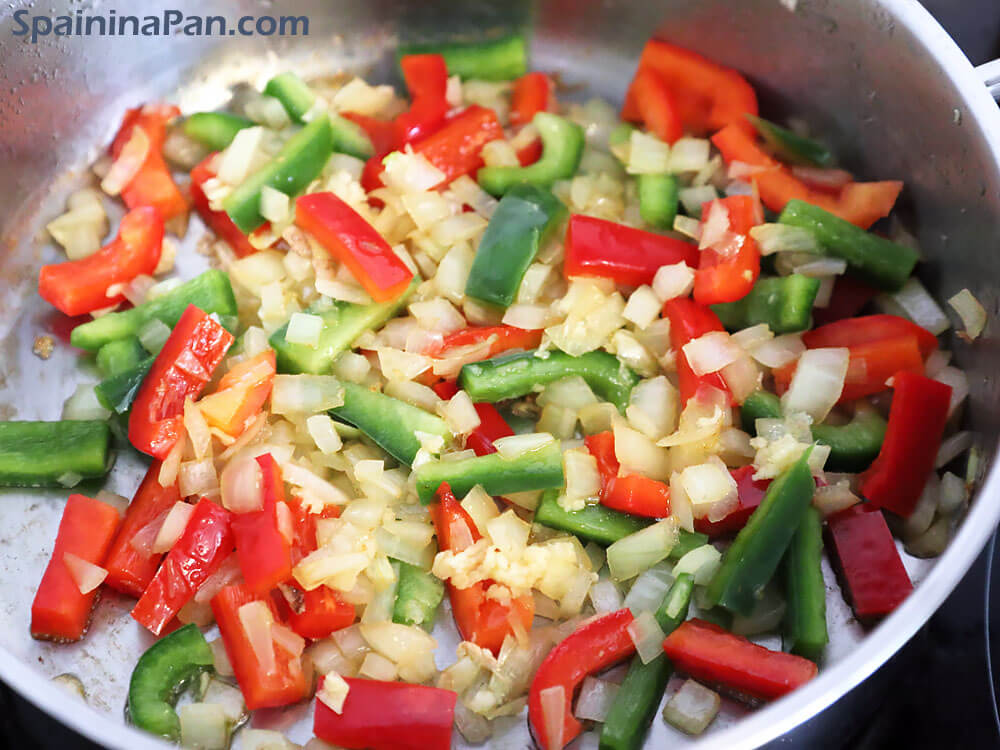 This dish can also be made in a large frying pan.
 This dish can also be made in a large frying pan.
Is Chicken and Chorizo Paella Really “Authentic”?
From a Valencian perspective and elsewhere, chicken and chorizo paella is not considered authentic Spanish.
The authentic paella Valenciana is protected with identified ingredients, and chorizo is notably absent everywhere. It is often also not considered an authentic Spanish paella. I'll leave it in the middle.
The inclusion introduces a dominant smoked flavor that differs from the more vegetal and mild profile of other paellas.
However, outside Valencia, “paella” became a broader concept describing a cooking method rather than a fixed recipe, allowing for international adaptations.
The Debate Behind This Popular Variation
The debate revolves around the preservation of a tradition versus culinary evolution. In Valencia, paella is a symbol of regional identity, often cooked communally.
Differences, especially those that change the flavor and the natural aspect significantly, are often viewed as inauthentic.
However, outside of Spain, dishes labeled as paella have adapted to local tastes and ingredient availability, whilst preserving their natural composition.
The chorizo version gained popularity in part through media and tourism, which sparked backlash from Spanish chefs who saw it as distorting a culturally specific dish.
The broader issue is, when does adaptation become misrepresentation? I just go with the flow, enjoy it while it's there and available. Even in Spain!
Ready to Make the Best Chicken and Chorizo Paella at Home?
While it may not align with Valencian tradition, applying a few guidelines will produce a more balanced paella.
Here are some tips:
- Chorizo, especially cured, already has a certain acidity from fermentation. Adding white wine, lemon juice, etc may acidify the paella even more.
- Don't cook chorizo too long, add it just before adding the rice so it releases flavor without hardening.
- Use chicken broth or bouillon, which dilutes the acidity. Vegetable and fish broths are generally more acidic.
- The bell peppers and onion help add a complex sweetness, which helps tone down a strong taste and balance the paprika.
Enjoy this modern and international take on the "forbidden" paella. It makes me want it even more.
*****
Edu's Authentic Spanish Paella Recipes
Recent Articles


-
Easy Spanish Chicken and Eggs Soup
 A comforting Spanish chicken and eggs soup recipe. Simple ingredients, great flavor and ready in under an hour.
 -
Spanish Scrambled Potatoes | Easy 20-Min Recipe
Spanish scrambled potatoes with a crispy, golden finish. This easy 20-minute recipe delivers natural, authentic flavor with simple ingredients. -
The Best Recipe for Torrijas from Spain!
Try the best recipe for torrijas from Spain. Learn how to make this classic treat at home in simple steps.

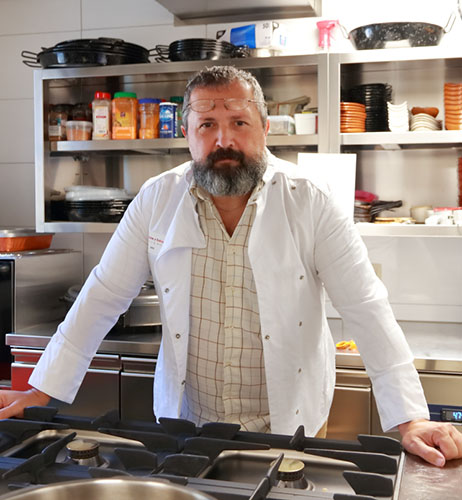
Hello there! I'm Edu, and I'm here to share my Spanish recipes for you to enjoy! As a cook, I love sharing my heritage through food, featuring the dishes our parents and grandparents made in Spain. From time to time, I still discover new culinary creations. Join me on this flavorful adventure and explore the delicious world of Spanish cuisine!