- HOME
- Spanish Desserts
- Torrijas
Is This the Best Recipe for Torrijas from Spain?
(Torrijas Españolas)
By Edu Valor / Author - Spanish Chef
I've known the recipe for torrijas since the day I could walk, thanks to the women of my family. Its simplicity led us to follow the same procedure over and over again.
They always made them around Semana Santa (Holy Week) and La Cuaresma (Lent), major religious and traditional celebrations in Spain.
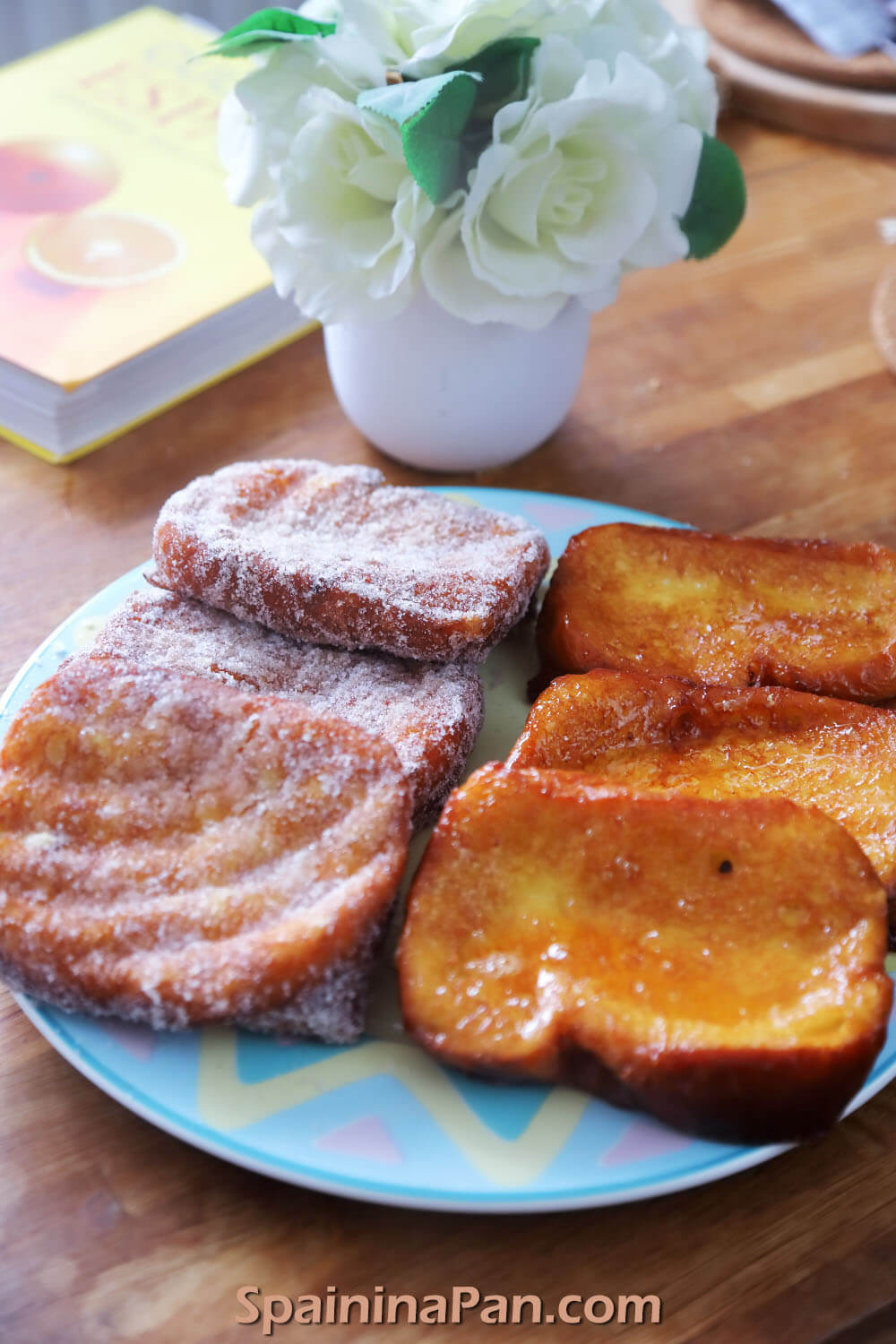
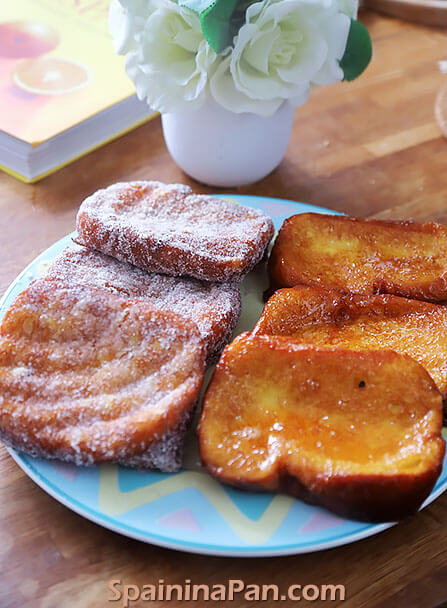
They soaked the bread pieces in either infused wine or milk, then coated them with honey after frying. That's the whole process!
But as I got older, a keen eye was all it took to learn how professional chefs made them, and that's the recipe you'll find here.
Which Bread Works Best for this Recipe for Torrijas?
The best bread for torrijas is dense and slightly stale. Dense and airy breads are especially good. Cut them up, around 2–3 cm thick (roughly 1 inch), and let them go stale for a day or so.
Brioche and pan de leche (milk bread) are good examples of dense yet airy loafs. Baguette, or a traditional Spanish bread like pan de pueblo, work well too. Whatever similar bread you can get your hands on should be good enough.
In Spain, special torrijas bread is readily available at Mercadona, DIA, SuperCor, El Corte Inglés/HiperCor, etc.
For our family, we would use a regular white bread loaf, the square ones! As time went by, we tried other bread types and found the dense, light ones to work best.
Staleness helps the bread soak up the milk mixture without falling apart during frying. Fresh bread tends to fall apart.
Let's Make Crispy Honey and Sugar Torrijas
Ingredients for 6 Torrijas
Preparation: 30-35 minutes total
Frying: approx. 3-4 minutes per batch.
Coating/Dusting: 5-10 minutes
*Measurements in metric and USA Imperial system. For British/Canadian measurements, please use the metric conversion calculator.
- A loaf of white bread, cut into 6 slices (approx. 1 inch / 2–3 cm thick)
- Olive oil or another cooking oil, for frying
For soaking:
- 500 ml / 2 cups whole milk
- 250 ml / 1 cup heavy cream (35%)
- 120 g / ½ cup + 1 tbsp sugar
- Peel of ½ orange
- Peel of ½ lemon
- 2–3 cinnamon sticks (or 1 tsp ground cinnamon)
For the egg coating:
- 5 medium eggs, beaten
- A pinch of salt
For the final coating/dusting:
- 250 g / ¾ cup honey, diluted with 1–2 tbsp of water (do not heat)
- 200 g / 1 cup sugar mixed with 2 tsp ground cinnamon
Step-by-Step Instructions
- Heat the milk with the cream, sugar, cinnamon sticks, lemon, and orange peel. When it starts to steam, turn the heat off, it doesn't need to boil. Stir a couple of times to dissolve the sugar. Let it infuse for 20–30 minutes.
- Lay the bread slices in a large tray and gently pour the milk mixture over them. Leave in the refrigerator until the milk is fully absorbed and cold.
- Heat a frying pan with the cooking oil to around 170°C (340°F).
- Carefully lift each soaked slice out of the tray with a wide spatula and let it drain for a few seconds before submerging it in the beaten egg. Use a medium-sized bowl for this, ideally no wider than two bread slices.
- Let the excess egg drip off each slice, then fry until golden brown. Lay them on kitchen paper or a wire rack to drain the excess oil.
- Dip 3 torrijas into a small bowl of diluted honey, one by one, and place them on a tray.
- Toss the remaining 3 torrijas in the cinnamon sugar mixture until well coated.
They're ready to serve, but if you prefer, keep them in the refrigerator until cold. They'll keep for up to 3 days.
Some chefs serve torrijas with a scoop of vanilla ice cream or a small dollop of whipped cream. There are many variations of this pastry, so feel free to get creative. How about soaking those slices in chocolate milk?
TIPS:
- Lightly fry a lemon peel in the cooking oil before you start, without letting it brown. It gives the torrijas a subtle freshness. Karlos Arguiñano uses this trick.
- Use whole milk only if you'd rather skip the cream. In that case, use 750 ml (3 cups) of whole milk.
- Substitute the milk and cream with dry white wine if you prefer a tangier bite. We used to make these.
- Mix the cinnamon sugar with the zest of half an orange for that little extra something.
- I never heat the honey, unlike some other Spaniards I know. Heat destroys its quality and natural enzymes, anything above 40°C (104°F) starts to degrade them.
What You Will Need
- Frying pan
- Large tray
- Medium and small bowl
- Bread knife
- Peeler
- Sauce pan
- Grid or kitchen paper
- Spatula
- Measuring spoons
- Measuring beaker
- Scale
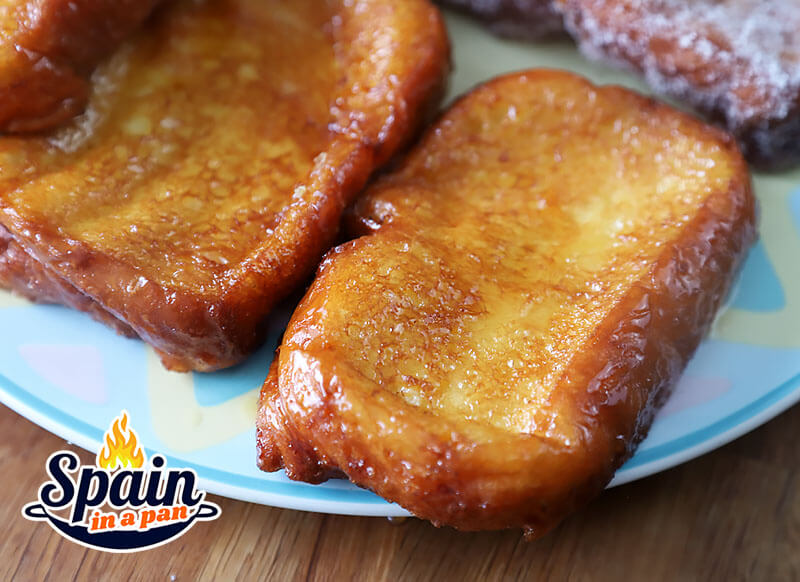
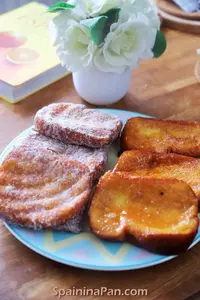
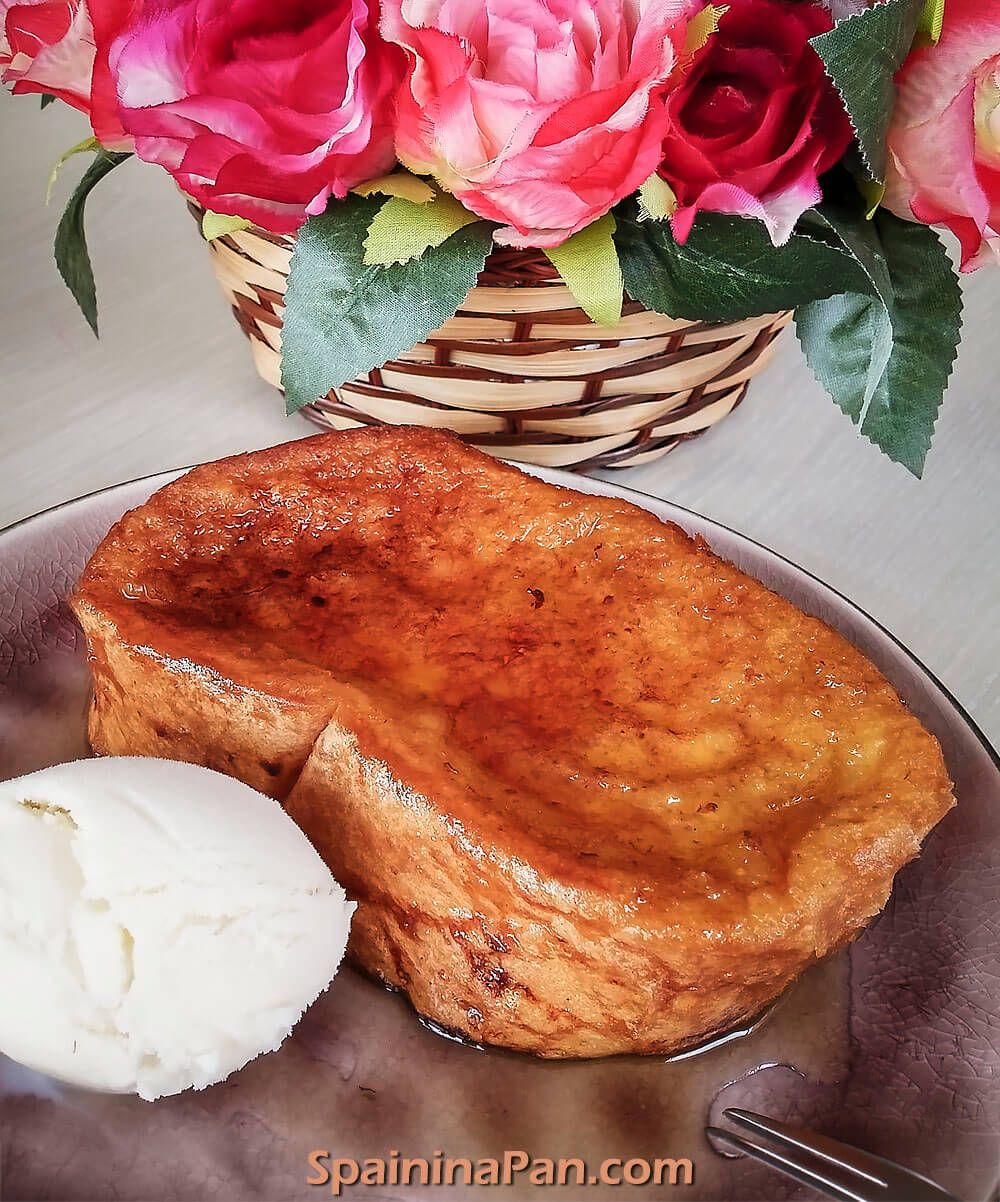 Torrijas made of a regular white bread loaf.
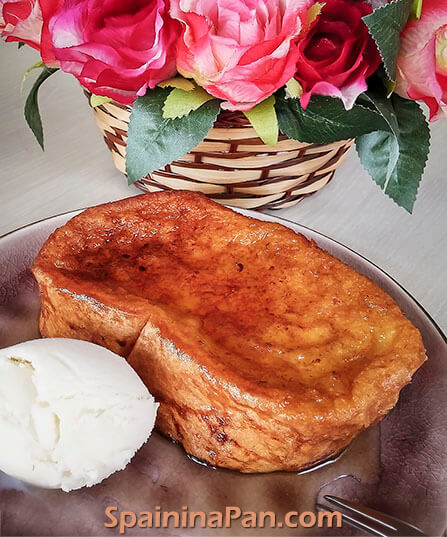 Torrijas made of a regular white bread loaf.
The Secret Ingredient That Makes Your Torrijas Extra Creamy
The creaminess of a torreja starts with picking the right bread. Once you have it, it only needs one added ingredient.
The average bread doesn't have much fat, so we are going to add some. Combining whole milk with heavy cream (35%) to soak the bread slices does the trick.
Infused with cinnamon sticks and lemon/orange zest, it produces a noticeably richer result than milk alone, making it a terrific recipe for torrijas.
The infusion should be warm when poured over the bread slices to help absorption.
Sometimes a splash of sweet wine such as Moscatel is added, which brings depth to the flavour. We never added the wine.
How Long Should You Soak the Bread?
A lot of people don't do this step long enough. The bread needs enough time to absorb the milk mixture through and through.
Leave it at least 20 minutes, longer if the bread is on the tougher side. Brioche needs only 20 minutes, sometimes less, depending on slice thickness.
If you're concerned the slices might break during coating and frying, put the bread slices in the refrigerator to soak. Either way, you have to be very gentle when handling them with a spatula.
Refrigerating helps them firm up slightly, making it easier to coat in egg and fry.
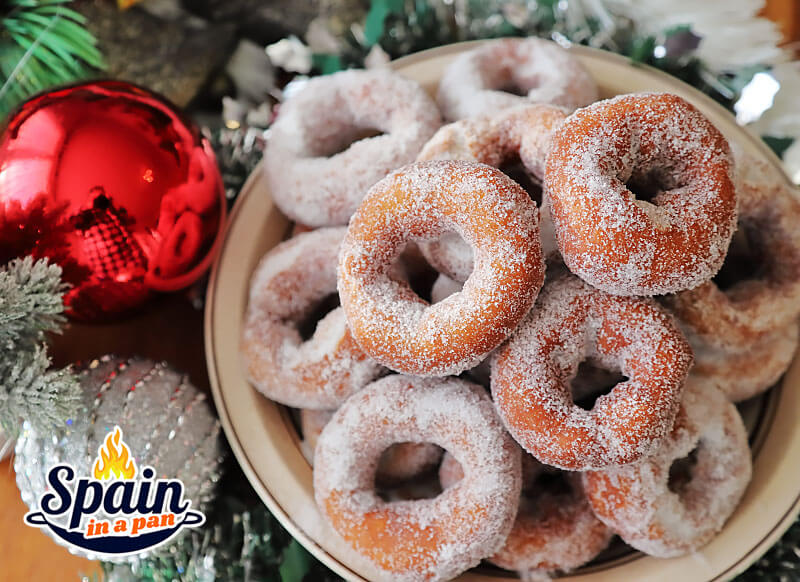
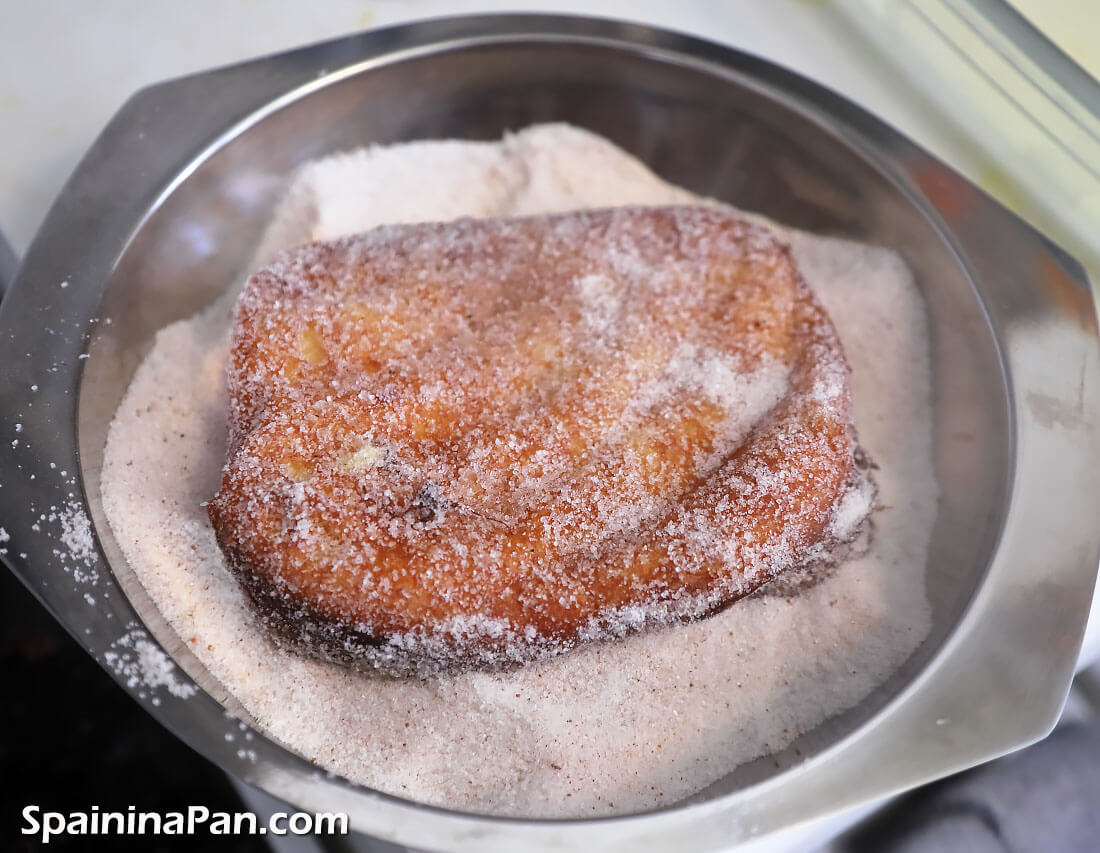 Sugar dusting a torrija, with a hint of cinnamon.
 Sugar dusting a torrija, with a hint of cinnamon.
The Classic Honey Finish and Other Twists
The traditional finish for torrijas is a honey coating, one of the oldest ways of sweetening the bread slices, even predating sugar dusting.
Sugar dusting is done right after frying, while the surface is still warm and sticky. When using honey, I prefer to wait until the torrijas are lukewarm, as too much heat degrades honey's natural enzymes and flavour above 40°C (104°F).
For variations, instead of milk, a syrup made with white wine, sugar, lemon, orange peel, and cinnamon produces a deep, tangy flavour.
Today, there are many variations. A small amount of orange zest mixed into the cinnamon sugar dusting adds freshness without significantly changing the pastry.
The Best Milk Mixture for a Rich, Custardy Soak
Whole milk is the base, but we're going to improve the flavour with cream and a few other ingredients.
Heat the milk and cream gently with cinnamon sticks, a strip of lemon, and orange peel. Sugar is an obvious addition. You don't need to boil it, when it starts to steam, turn off the heat and let it infuse.
The beaten eggs are used for the outer coating just before frying; never mix them into the soaking liquid. This two-step process is what gives this recipe for torrijas their layered texture.
*****
Edu's Delicious Desserts
Recent Articles


-
Easy Spanish Chicken and Eggs Soup
 A comforting Spanish chicken and eggs soup recipe. Simple ingredients, great flavor and ready in under an hour.
 -
Spanish Scrambled Potatoes | Easy 20-Min Recipe
Spanish scrambled potatoes with a crispy, golden finish. This easy 20-minute recipe delivers natural, authentic flavor with simple ingredients. -
The Best Recipe for Torrijas from Spain!
Try the best recipe for torrijas from Spain. Learn how to make this classic treat at home in simple steps.



Hello there! I'm Edu, and I'm here to share my Spanish recipes for you to enjoy! As a cook, I love sharing my heritage through food, featuring the dishes our parents and grandparents made in Spain. From time to time, I still discover new culinary creations. Join me on this flavorful adventure and explore the delicious world of Spanish cuisine!