- HOME
- Andalusian Cocido
The Best Andalusian Cocido Recipe: A Chickpea Stew.
(Cocido Andaluz)
By Edu Valor / Author - Spanish Chef
I had this dish for as long as I can remember. The Andalusian cocido recipe was a standard stew in our family with some minor twists now and then.
I wouldn't call it a spectacular dish, but the health benefits make it one, much like with the Madrilenian and other cocidos. Natural dishes tend to have that reputation.
Even as a kid, I enjoyed it each time it was on the table. Maybe I wasn't a picky eater; it just had that familiar taste that I liked. The variety of ingredients sure made it an appetizing dish too.
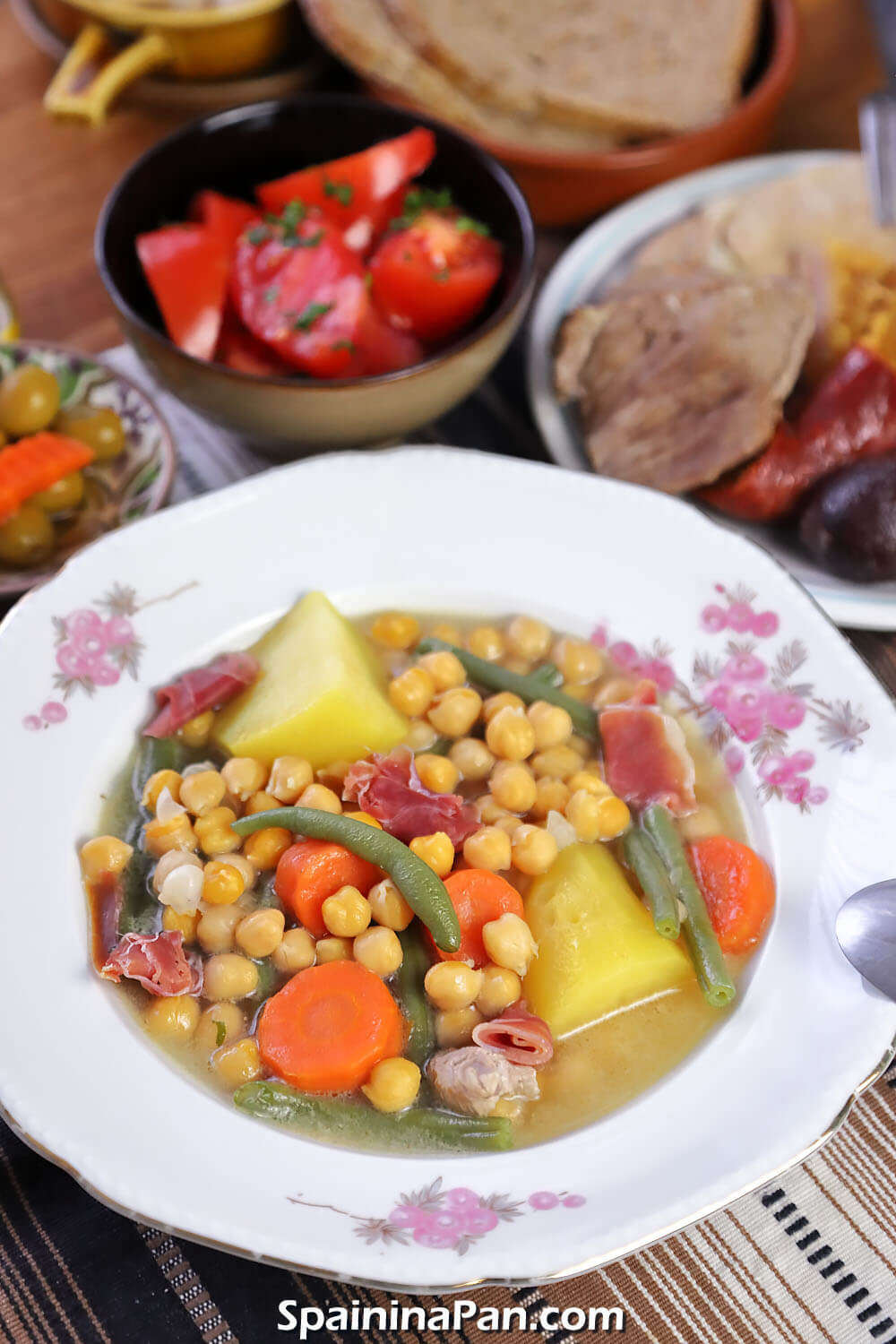
Traditional dishes like these don't easily lose their popularity because of the nutritional value it has.
You can't beat that type of culinary honesty, and there are several versions of the cocido all over Spain.
Some day I might take my time to find which main varieties there are.
For me, the Andalusian cocido recipe has that extra point over the Madrilenian version for the added taste from the tocino añejo.
Next on my list are:
- Cocido Maragato
- Cocido Montañés
...and many others will follow! The old winter dish is an ideal addition to the active person's diet, even in the summer. Nobody ever died from having nutrient-rich winter dishes in the summer.
Let's Make this Terrific Andalusian Cocido Recipe!
Ingredients for 4 servings
Preparation: 20 minutes
Cooking: Approx. 45 minutes, 5-10 for browning the meat.
*Measurements in metric and USA Imperial system. For British/Canadian measurements please use the metric conversion calculator.
- 400 g / 14 oz canned or jarred chickpeas (garbanzos)
- 200 g / 7 oz green beans, cut in half
- 200 g / 7 oz carrots, peeled and cut into thick slices (or pumpkin cubes)
- 200 g / 7 oz bacon (pork belly)
- 200 g / 7 oz pork (or beef)
- 200 g / 7 oz blood sausage (black pudding)
- 200 g / 7 oz chicken
- 150 g / 5 oz tocino añejo (cured pork belly), optional
- 200 g / 7 oz potatoes, large chunks (quarters)
- olive oil
- Sea salt and pepper
- 1 finger of cured chorizo (optional)
If you're going to use pumpkin instead of the carrots, add them in the last 30 minutes.
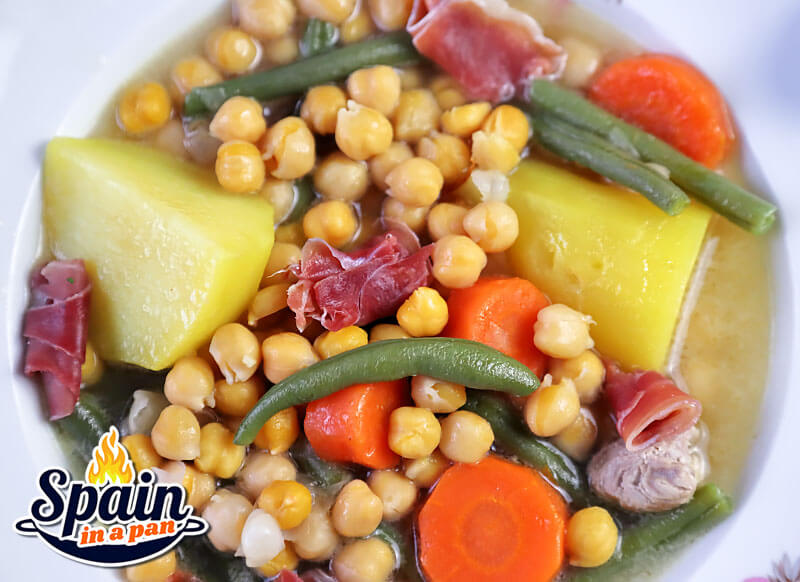
An optional step is to garnish the cocido with pieces of serrano ham.
Step-by-Step Instructions
- Quickly sear the seasoned meats, pork, bacon, and chicken in some olive oil on high heat until browned.
- Add the garbanzos, carrots, and cured pork belly. Pour enough water to cover the ingredients by approximately 1 inch. Taste and season if needed.
- Bring to a boil, then cover and simmer for 45 minutes on medium-low heat.
- In the last 15-20 minutes, raise the heat to medium, add the potatoes, blood sausage, and green beans (add chorizo here too if used). Stir a couple of times. Taste again.
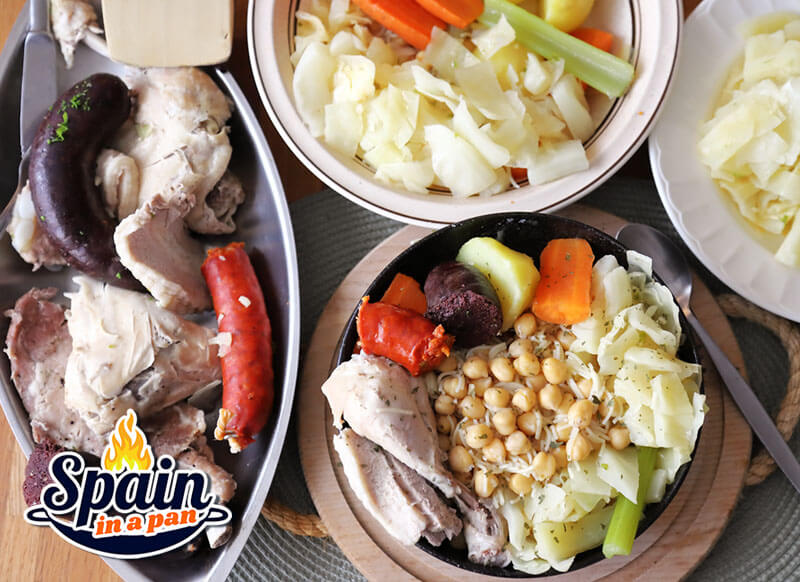
- Before serving, remove the meat and put it on a separate tray. Cut them up into 4 portions and serve after the cocido meal. You can make a pringá (see photo below) with the meat and make a sandwich. A custom in Spain.
TIPS:
- The meat doesn't need to be cut before cooking.
- If using pumpkin, add it in the last 30 minutes.
- Garnish the cocido if you like with pieces of serrano ham.
- If needed, add some water.
- At the end of the meal, crush the meat with a fork to make a pringá. See photo below.
- If used, add cured chorizo in the last step, with the potatoes.
- When using dry garbanzos, soak them overnight, then cook for 1 hour instead of 45 minutes.
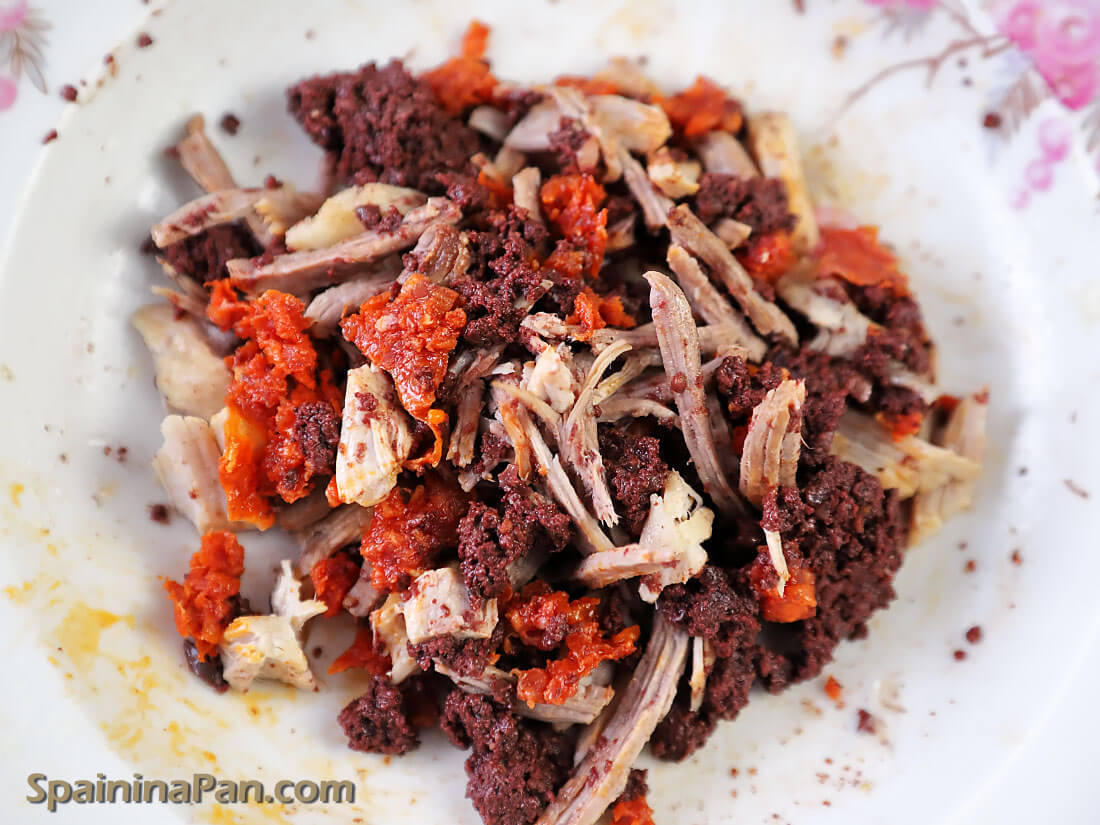 Pringá, a mix of crushed stew meat.
 Pringá, a mix of crushed stew meat.
What You Will Need
- Cooking pot with cover
- Ladle
- Meat knife
- Paring knife
- Cutting board
- Pitcher
- Scale
Is Pringá the Soul of Cocido or Puchero?
The meats in a cocido or puchero do contribute quite a taste to the stews. Pringá is rather a spin-off with its own character and taste. In fact, in Andalusia, many would argue that pringá is not just a by-product of the stew, it is the emotional payoff at the end of it.
In the Andalusian cocido recipe (often called puchero in Andalusia), you usually have chicken, pork (belly or panceta), and blood sausage (morcilla). Quite often, there is also tocino añejo (cured pork fat), and sometimes beef shank or jarrete.
A crushed mixture of these is going to have a slightly different texture and taste compared to other stews. Partly because broth, chickpeas, or vegetables do not dilute it. It’s pure protein and fat, bound together by gelatin from slow cooking.
I know quite a few fellow Spaniards who just love the mishmash of different meats with that typical Spanish stew aroma. There’s something nostalgic about it.
Cocido and puchero have historically been peasant dishes. Slow-cooked, economical, and designed to extract maximum flavor from inexpensive cuts. Pringá represents the reward after the meal.
It’s good, and it makes the cocido what it is. If you’ve never had cocido, try this one, and you’ll know what I mean.
Traditionally, it is served in three stages (vuelcos), similar to the Madrilenian stew. We never had it that way. In our family, it was limited to 2 vuelvos. First, the stew itself, and then all the meats together.
Pringá is slowly becoming a dish on its own.
Often served on a piece of bread or in a bun, I wouldn’t be surprised if we’d see burgers made out of it. (In fact, in Seville and Cádiz, you already find the mollete buns with pringá in many traditional bars.) That’s an idea I’m working on.
Some mothers and grandmothers made the pringá an art form. That’s how good they are. So much so that it became a dish on its own.
Today, sandwiches are made with this meat “crush”! It’s probably still in its beginning stages of popularity outside Andalusia, since not every bar or restaurant offers them. But in cities like Seville, a pringá sandwich is already a staple in traditional tabernas.
The art of the pringá is in using your fork to mash and cut the meats and fats together into a uniform, savory mix. The gelatin from the slow cooking binds everything naturally, no sauces needed.
The good thing is, besides being delicious, there’s no set standard, no set recipe to make pringá. You can use shoulder, beef, veal, chicken, pork belly, jamón, sausages, chorizo, morcilla, tocino, etc. Whatever meats are used for the stew.
In some households, even the marrow from beef bones gets mixed in. The composition depends entirely on what went into the cocido.
In short, whatever meat you use for stews or in this Andalusian cocido recipe can become pringá.
And maybe that’s the real answer: pringá isn’t just the heart of cocido or puchero. It’s what remains when the broth is gone, the essence of it.
*****
Edu's Natural and Healthful Cocido Stews
Recent Articles


-
Easy Spanish Chicken and Eggs Soup
 A comforting Spanish chicken and eggs soup recipe. Simple ingredients, great flavor and ready in under an hour.
 -
Spanish Scrambled Potatoes | Easy 20-Min Recipe
Spanish scrambled potatoes with a crispy, golden finish. This easy 20-minute recipe delivers natural, authentic flavor with simple ingredients. -
The Best Recipe for Torrijas from Spain!
Try the best recipe for torrijas from Spain. Learn how to make this classic treat at home in simple steps.




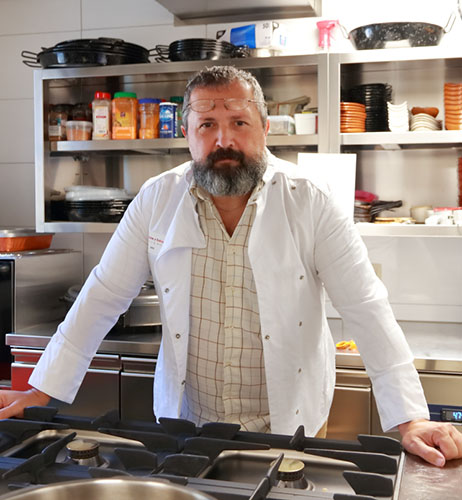
Hello there! I'm Edu, and I'm here to share my Spanish recipes for you to enjoy! As a cook, I love sharing my heritage through food, featuring the dishes our parents and grandparents made in Spain. From time to time, I still discover new culinary creations. Join me on this flavorful adventure and explore the delicious world of Spanish cuisine!