- HOME
- Potato Recipes
- Tortilla Española
Is this Spanish Tortilla Recipe the Best One?
(Tortilla Española)
By Edu Valor / Author - Spanish Chef
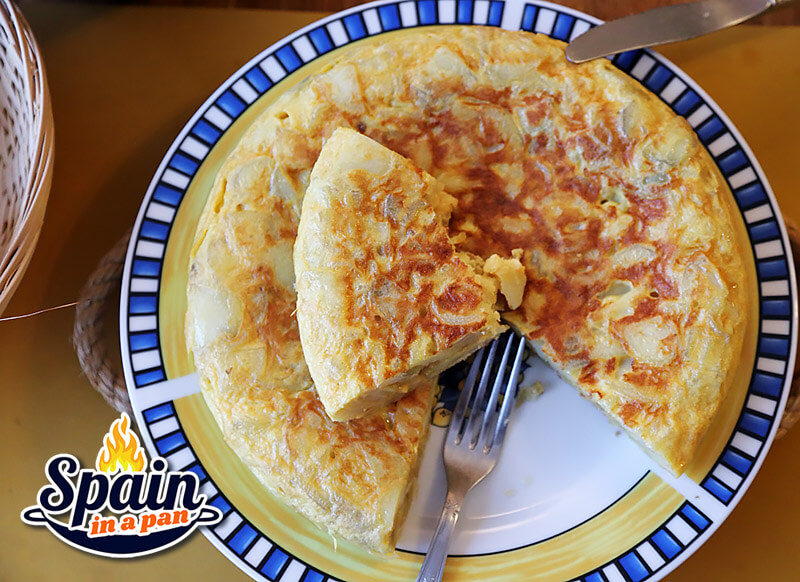
Is the one with onion the best Spanish tortilla recipe? Everyone has their own taste, of course. When people order at my sister's restaurant, it's usually the one with onion.
It has that extra heartiness and subtle sweetness that makes it, in my opinion, a clear winner. Many other Spaniards agree, but I might get yelled at!
Whether with or without onion is heavily debated in terms of authenticity and taste. Much like the authentic paella Valenciana.
The other version, tortilla de patatas without onion, is just as traditional and widely eaten. It's also considered the original potato tortilla.
Both can be served as tapas too. Chop it into large cubes, and you're good to go!
The exact origins aren’t entirely clear, but the earliest known reference dates back to 1798 in Villanueva de la Serena, Extremadura.
At the time, it was known as pan de patatas (potato bread bound with eggs). It loosely reminds me of the other pans, pan de Cádiz or pan de higo.
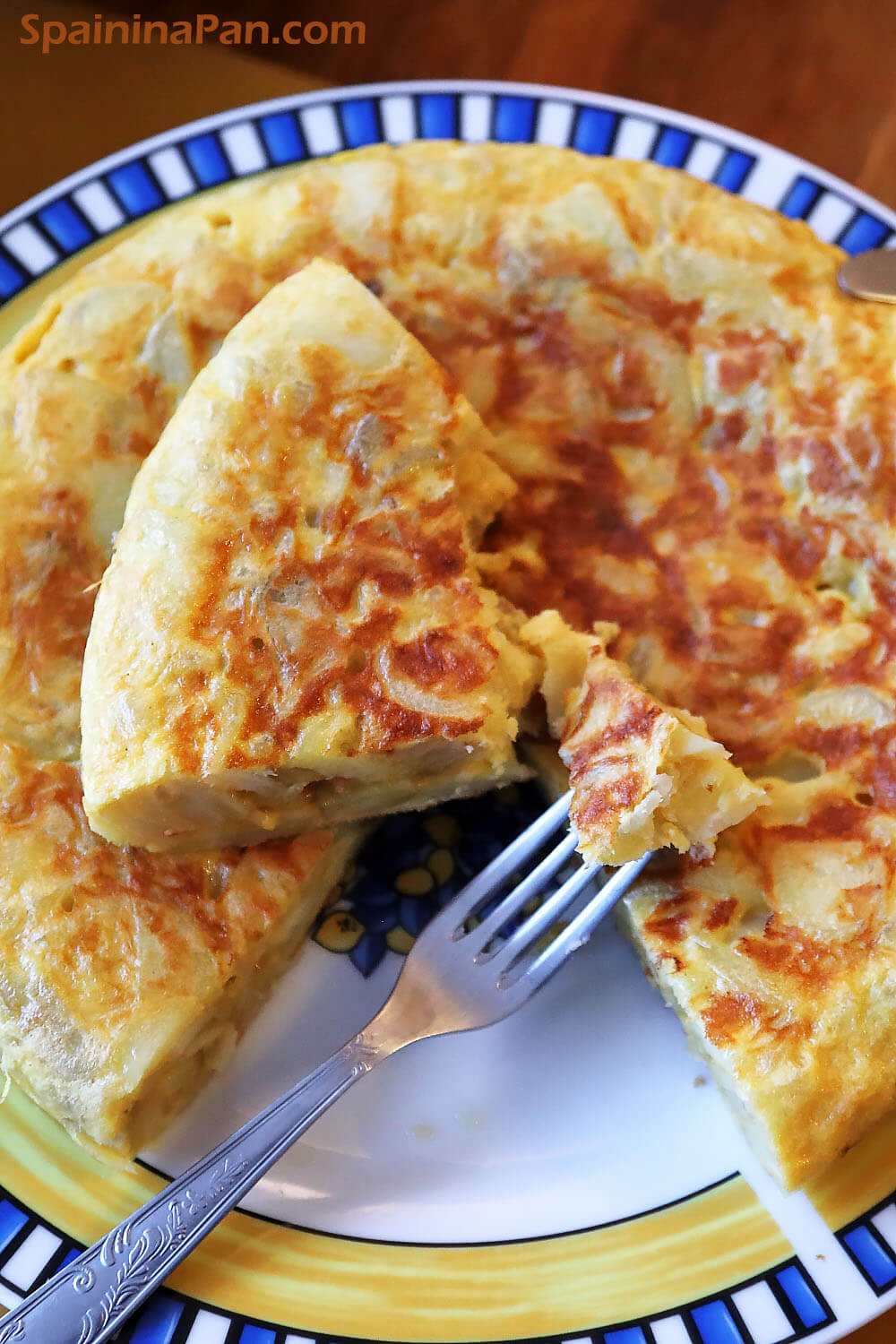
I love this dish for its simplicity, nutritional value, and satisfying density. It’s easy to see why it became a staple for field workers and poorer families. In its earliest form, the tortilla was very much a famine food.
We make it every other week at home, always the onion version, about 24 cm in diameter. Some of my siblings like it with mayonnaise. Not me!
I know the pan flip can be intimidating at first, but it’s a skill you pick up quickly. I’ve included instructions below the recipe to help you get it right.
What do You Pair it With?
Probably the most common is a salad of various vegetables, and they can be any. The most basic I had was sliced tomatoes with spring onion pieces, salt, and vinegar. Sometimes sprinkled with chopped parsley.
But feel free to use any combination. In our family, we often have tomato slices with chopped lettuce, onion slices, and cucumber pieces. The vinaigrette is usually just vinegar (sometimes replaced by lemon juice) and salt.
Salads are one option. If proteins are more your thing, then I got good news for you. Many Spanish families often pair the tortilla with meat.
That can go from sausages, chicken, to pork chops. They do pair pretty well with a tortilla. I have this idea of combining minced meat with the egg-potato mixture. Why not!?
Or pair it with tapas, such as albondigas in sauce, padron peppers, chorizo slices, jamón, etc.
However, let me be clear: the tortilla española is a complete meal in itself. Add a piece of whole wheat bread, and that's all you're going to need. Why? Because eggs are high-quality foods, full of the best proteins, and there are enough of those in this dish.
- Have it as a snack.
- Make a sandwich with it, and put it in your kid's lunchbox for school.
- Cut the tortilla into smaller pieces and serve it as tapas. A known habit in Spain.
- It makes an excellent breakfast choice, too.
Tortilla is an all-rounder for any moment of the day.
Let's Make the Best Spanish Tortilla Recipe
Ingredients for 3-4 Servings
Preparation: 15 minutes
Cooking: tortilla; max. 8-10 minutes, poaching potatoes/onions; approx. 15 minutes
*Measurements in metric and USA Imperial system. For British/Canadian measurements, please use the metric conversion calculator.
- 1 kg / 36 oz waxy potatoes
- 250 g / 9 oz sweet onion, cut in half, sliced thinly
- 8 large eggs
- Seasalt
- Olive oil (or regular cooking oil)
Use a 21-22 cm / 8.3-8.6 inches non-stick fry pan and a flat plate slightly larger than the pan. Lightly oil the plate with some paper towel.
IMPORTANT! On an induction cooktop, use a larger pan (23–24 cm). Thick tortillas don’t cook well on induction.
Step-by-Step Instructions
- Rinse and peel the potatoes. Cut them in half twice, then slice into pieces approximately 5-6 mm (¼ inch) thick. See photo below.
- Gently poach the potatoes with the onion strips in cooking oil at medium-low heat (approximately 130°C / 270°F) for about 15 minutes, or until the potatoes are tender.
- Remove the potatoes and onions with a colander and let them drain well in a large strainer.
- Meanwhile, beat the eggs in a large bowl and season with salt to taste.
- Add the drained potatoes and onions to the eggs and gently combine using a spatula. Let the mixture rest for 15 minutes.
- Pour some olive oil into a non-stick pan (diameter 21-22 cm / 8.3-8.6 inches) and heat over medium heat.
- Add the potato–egg mixture and cook for about 5-6 minutes. Check the edges with a spatula to see if they are setting. If not, cook a little longer. Shake the pan—the tortilla should slide freely.
- Place a plate over the pan and hold it firmly with one hand. Flip the pan and plate together in a quick, confident arc. The tortilla should now be on the plate.
- Return the pan to the stove and carefully slide the tortilla back in. Cook for 1-2 minutes or longer, depending on whether you prefer a creamy or firmer interior.
- To test doneness, gently press the tortilla with a spoon. If it dents easily, the interior is creamy. If it resists, the tortilla is set and firm.
TIPS:
- Poach the potatoes; don’t fry them unless you prefer that style. If you do fry them, cook the potatoes separately from the onions, as the onion slices tend to brown too quickly.
- Slice the onion thinly and avoid thick pieces.
- Let the potato–egg mixture rest for 15 minutes. This helps the ingredients emulsify and bind more evenly.
- Use a different cooking oil if olive oil is outside your budget.
- Enjoy the tortilla warm or cold. I like leftovers in a sandwich with lettuce or other greens.
-
Tortilla española also makes an excellent tapa. Cut large cubes and serve!
What You Will Need
- Frying pan diameter 21-22 cm / 8.3-8.6 inches
- Deep fryer or cooking pot with oil to poach potatoes and onions
- Paring knife
- Peeler
- Cutting board
- Scale
- Whisk (to beat the eggs)
- Strainer (to drain the poached potatoes and onions)
- Colander (to remove the potatoes and onions from the cooking pot)
Why I Don’t Cut Whole Round Potato Slices
Some Spaniards cut whole-round potato slices and fry them that way. There’s nothing inherently wrong with this approach, but larger slices tend to stick together once combined with the egg mixture, which can lead to uneven cooking.
When that happens, the potatoes push the egg away instead of binding with it properly. In other words, it prevents optimal emulsification.
Smaller slices, like the ones shown in the photo below, spread more evenly throughout the mixture. This allows for better binding and, more importantly, a better final texture.
Along the same lines, this cut helps distribute the egg flavor more evenly. The goal, ultimately, is to make the best Spanish tortilla recipe.
In Spain, there are tortilla contests, and the top examples are rarely made with whole-round slices. Using smaller slices consistently results in a more uniform tortilla.
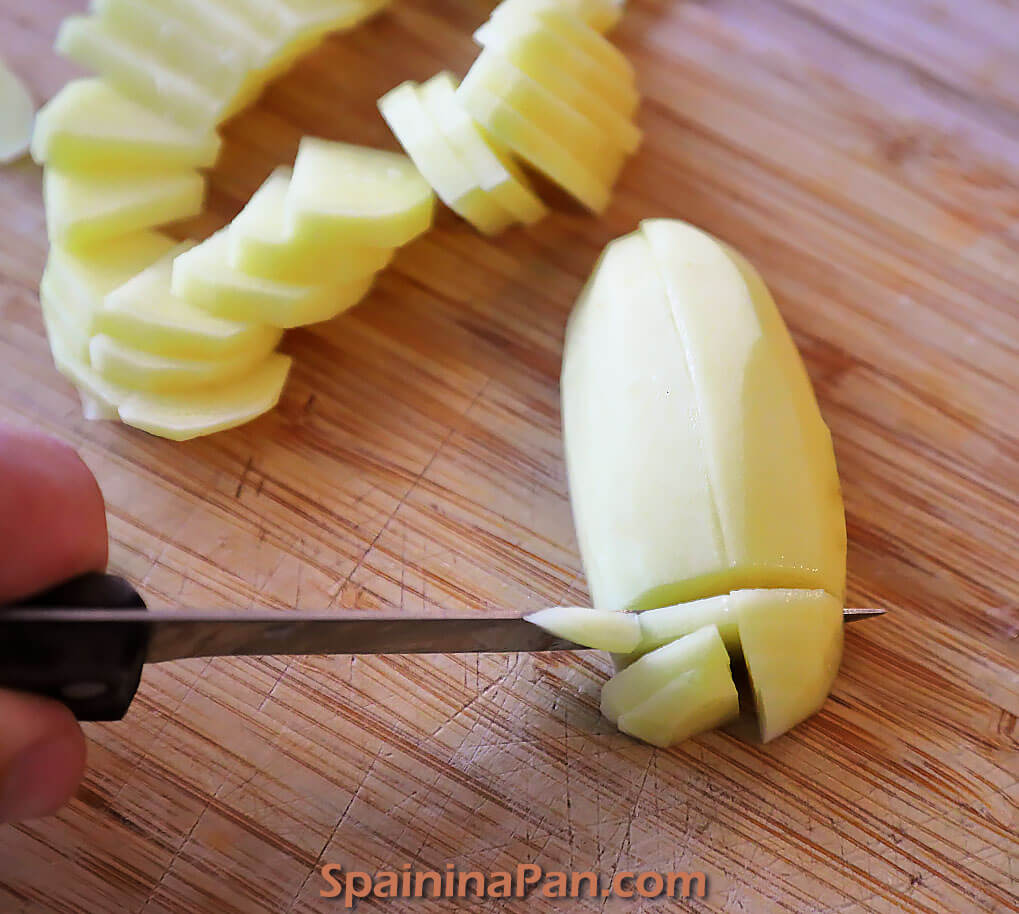 Cutting the potatoes.
 Cutting the potatoes.
Clean Flipping the Tortilla
Most failures happen during this seemingly delicate stage, and when the flip goes right the first try, it can look like pure luck. In reality, tortilla flips fail for specific reasons.
Keep the following tips in mind, and you’ll get it right on your first try:
IMPORTANT! With induction stoves, keep the tortilla moderately thick.
The sides of the pan won’t be hot enough to cook the edges of a thick tortilla,
so it'll stay liquid too long, and the bottom burns.
- Make sure the eggs are at room temperature.
- Keep the heat at medium, hot enough, but not aggressive.
- If possible, use a non-stick pan unless you’re an experienced cook using steel.
- Use a spatula to check that the edges are setting and no longer liquid.
- A good sign is when you shake the pan and the tortilla slides freely.
- Use a flat plate slightly larger than the pan, and lightly oil it with a paper towel.
- Don’t flip while the top is still very liquid. Creamy is fine.
- Flip confidently, in one continuous motion. Lifting the pan and quickly flipping it in an arc works better than trying to flip it in place.
- Bring the tortilla back to the pan by sliding it in, not dropping it.
- As your confidence grows, shorten the cooking time to achieve a creamier interior.
If you’re unsure whether the tortilla will flip right, it’s not ready yet. The process may look risky or complicated, but once you try it, you’ll see how manageable it really is.
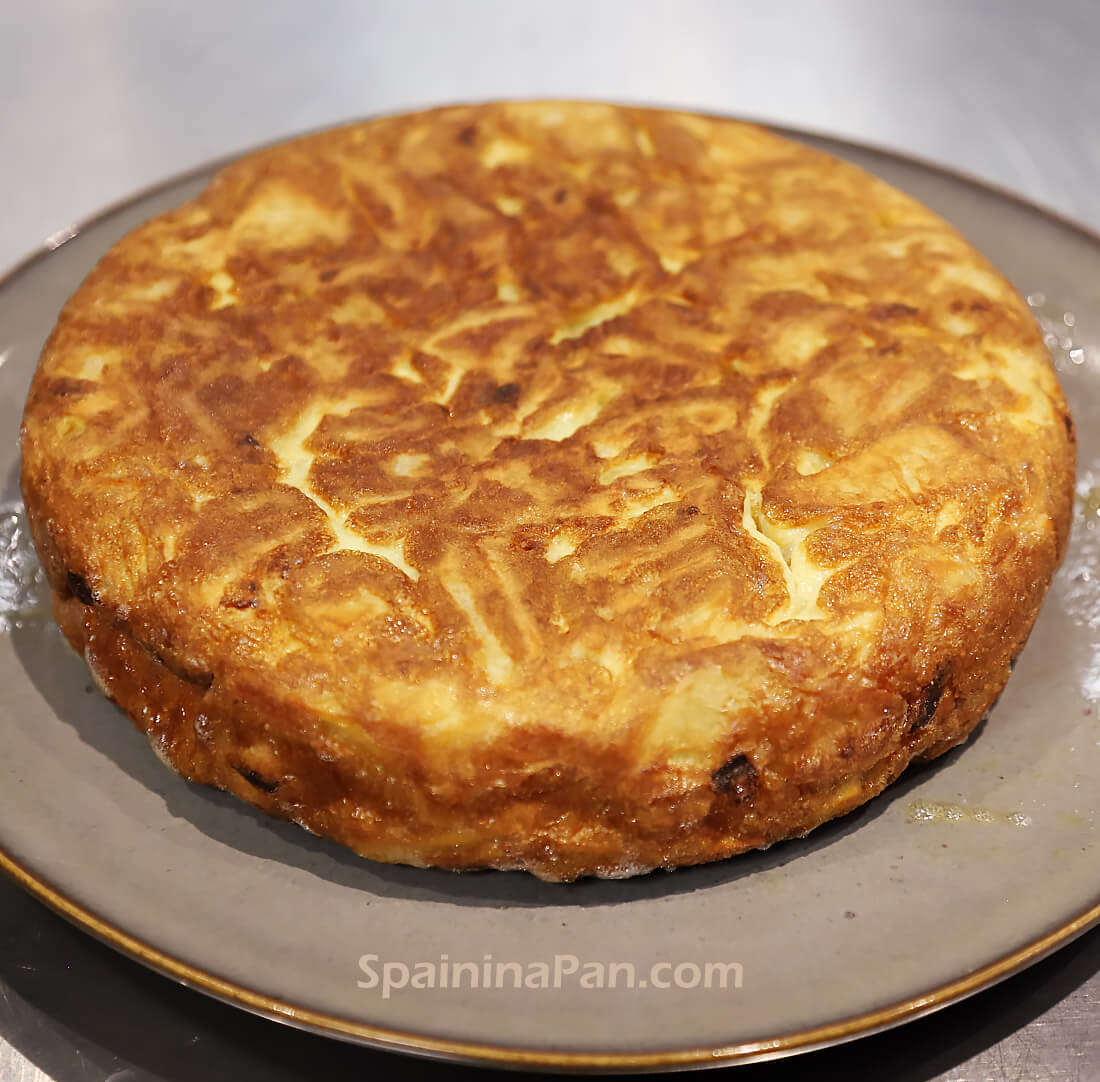 Thick, a little toasted and creamy inside. How I like it!
 Thick, a little toasted and creamy inside. How I like it!
What Makes the Best Spanish Tortilla Recipe?
With tortilla española, texture and seasoning are among the most important, but they’re not the only things to keep in mind.
Here are a few practical tips:
- Don’t cook it too long, it will dry out. The lightly toasted tortilla shown in the photo above was cooked quickly over medium-high heat to keep the interior creamy. With time, you’ll learn how to cook it exactly to your preference.
- Fill the pan at least halfway, ideally a little below the rim. Thin tortillas are less appealing and far more likely to break during flipping and sliding them back in the pan.
- Onion adds richness and a mild sweetness. Use at least ¼ onion relative to the potato weight and poach long enough for it to soften.
- Use enough eggs to properly bind the potatoes together. At least half the weight of the potatoes.
- Let the poached potatoes emulsify with the eggs long enough.
- Cut the potatoes into quarters, then slice them as shown in the photo above. This will give you a more uniform tortilla with excellent texture.
My ideal tortilla is cooked on medium-high heat for browning and a limited cooking time so it stays creamy or moist inside. Enjoy what is probably the best Spanish tortilla recipe, one of my favorite easy and filling dishes.
*****
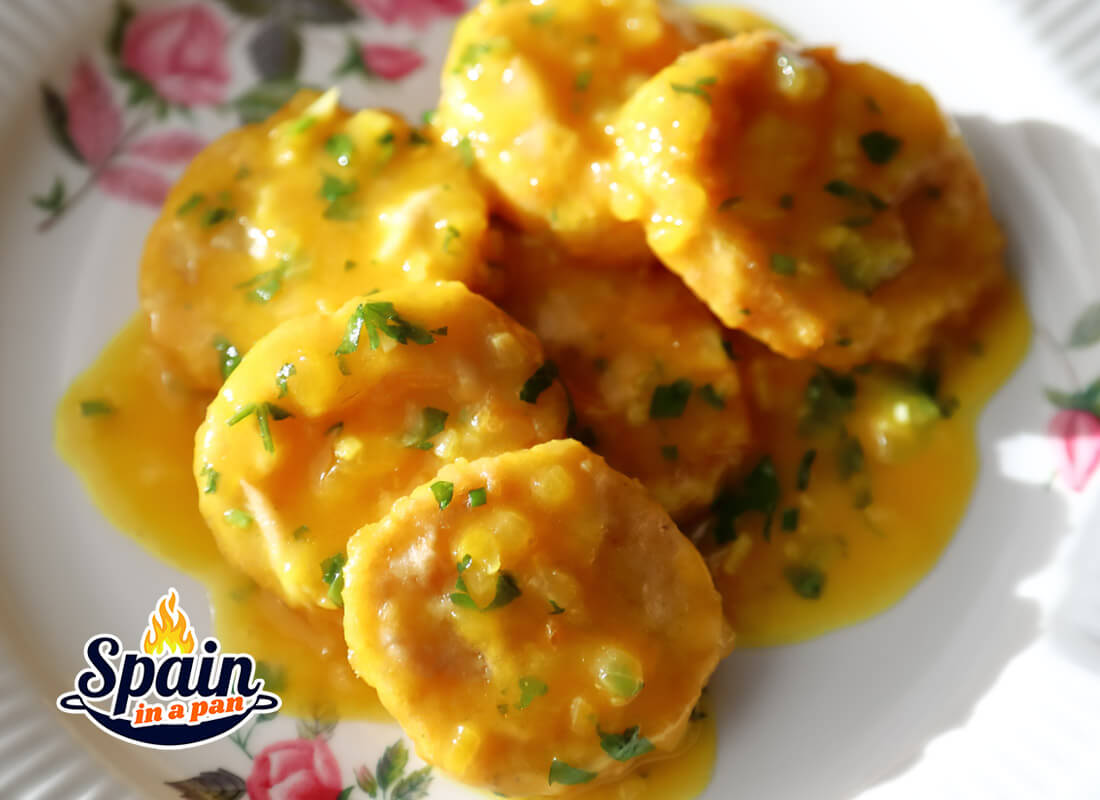
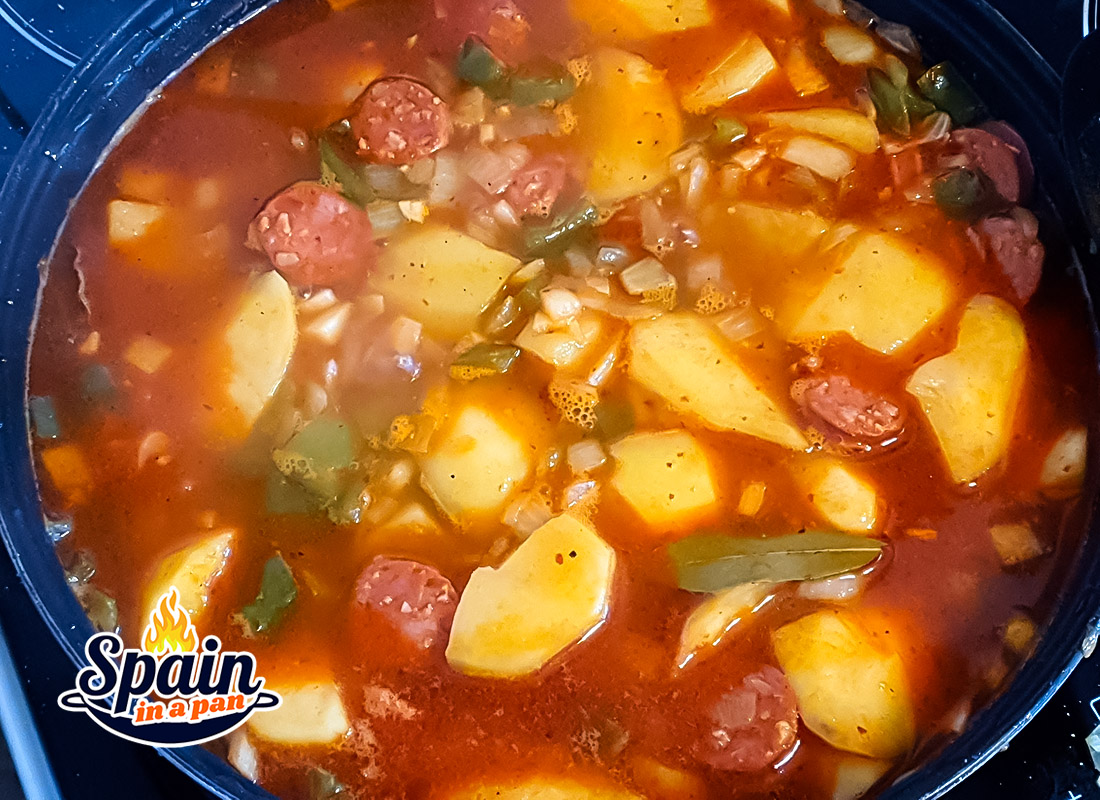
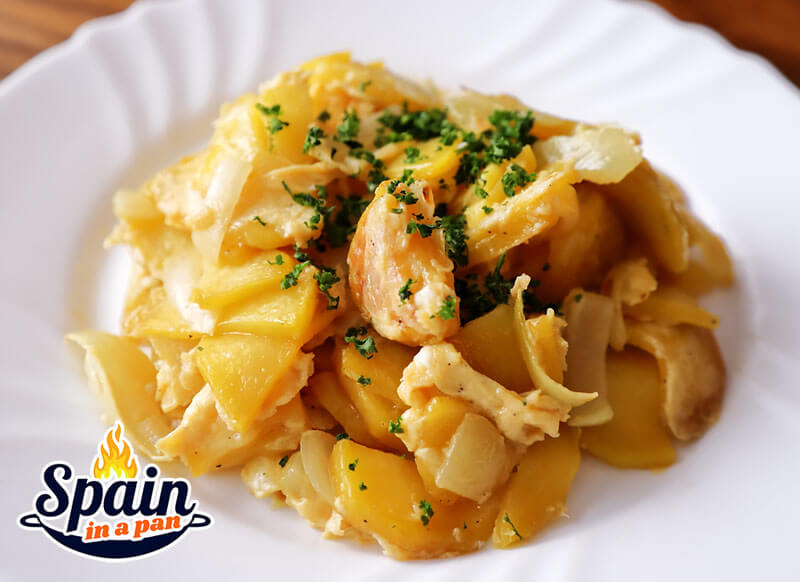
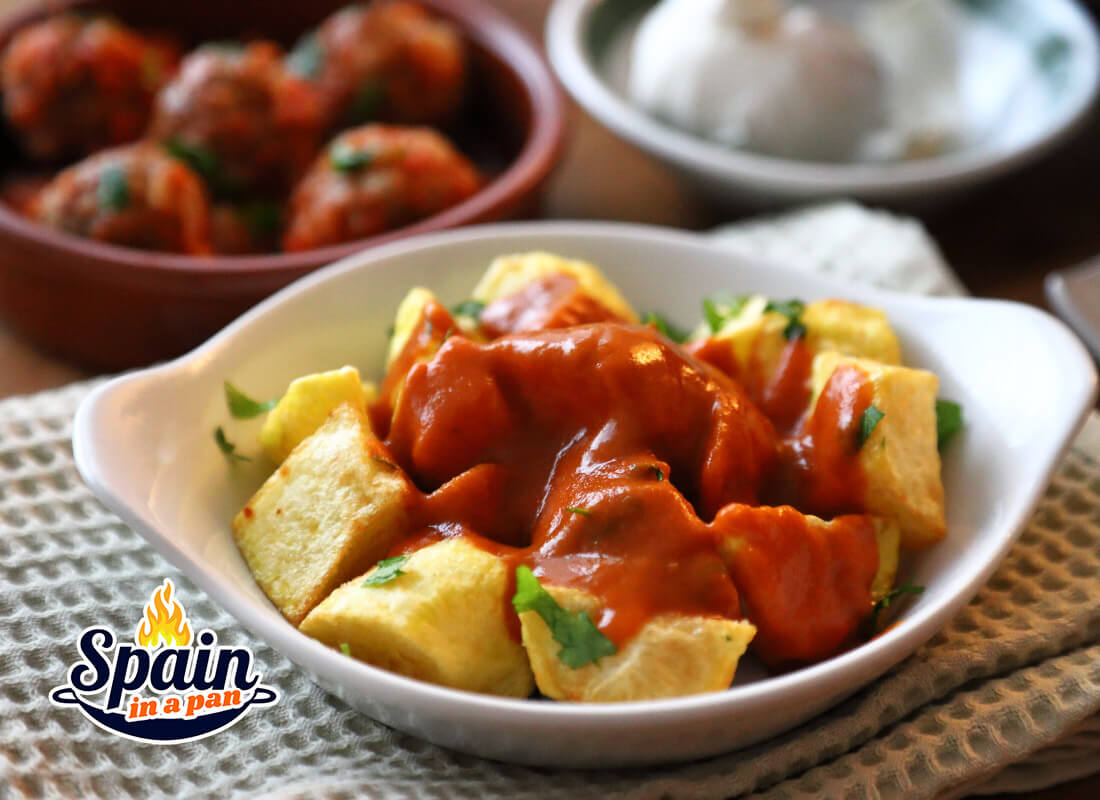
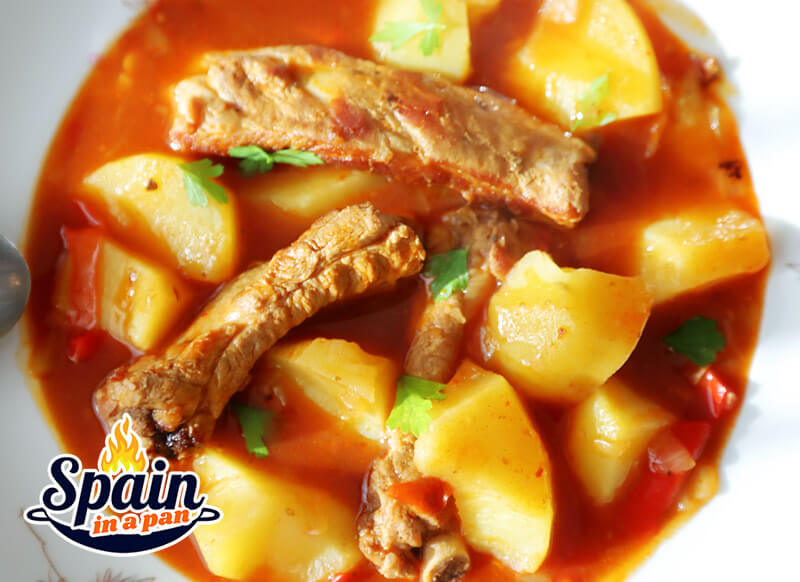
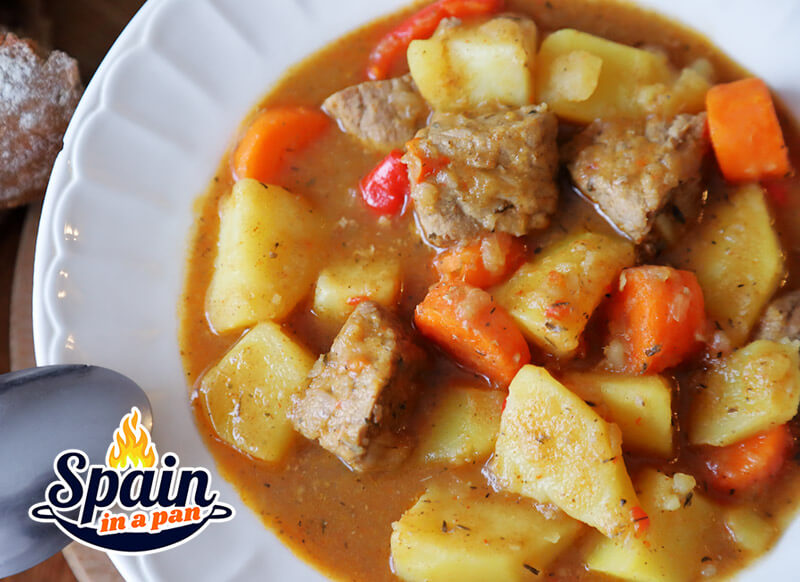
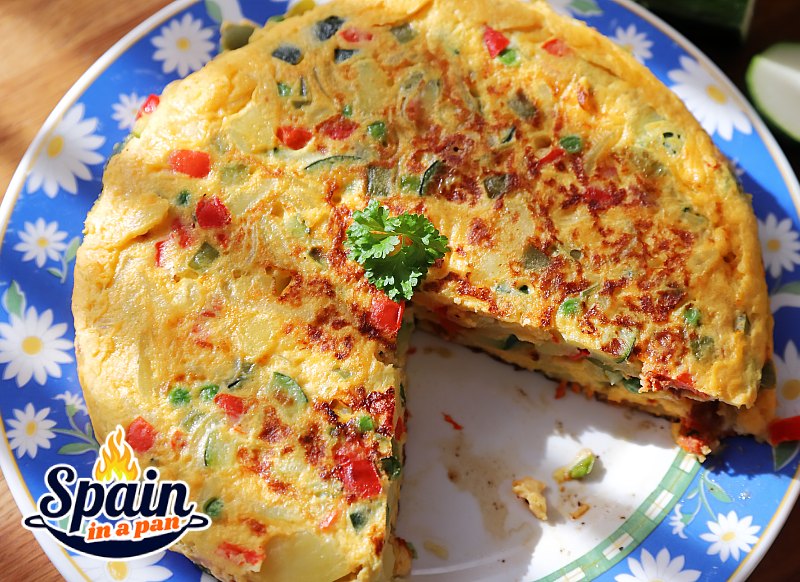
You Might also Like Edu's Other Classic Potato Recipes
Recent Articles


-
Easy Spanish Chicken and Eggs Soup
 A comforting Spanish chicken and eggs soup recipe. Simple ingredients, great flavor and ready in under an hour.
 -
Spanish Scrambled Potatoes | Easy 20-Min Recipe
Spanish scrambled potatoes with a crispy, golden finish. This easy 20-minute recipe delivers natural, authentic flavor with simple ingredients. -
The Best Recipe for Torrijas from Spain!
Try the best recipe for torrijas from Spain. Learn how to make this classic treat at home in simple steps.



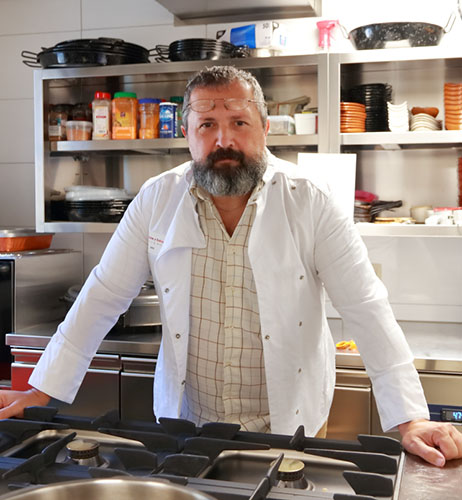
Hello there! I'm Edu, and I'm here to share my Spanish recipes for you to enjoy! As a cook, I love sharing my heritage through food, featuring the dishes our parents and grandparents made in Spain. From time to time, I still discover new culinary creations. Join me on this flavorful adventure and explore the delicious world of Spanish cuisine!