- HOME
- Pork Stews
- Fabada
Is this Possibly the Best Fabada Recipe?
(Fabada Asturiana)
By Edu Valor / Author - Spanish Chef
I've tried several versions of this stew, and I think this one is the best fabada recipe.
Great taste and texture, and most Asturian families make it this way. It's easy, one-pot cooking at its best. Just give it enough time.
The authenticity is there in every sense.
Asturias, in the green north of Spain, where fabada is not a restaurant gimmick or a vague “bean soup,” but a true part of family life.
This is the dish many middle-class families know well. It is warm, filling, and made for cold days and long walks.
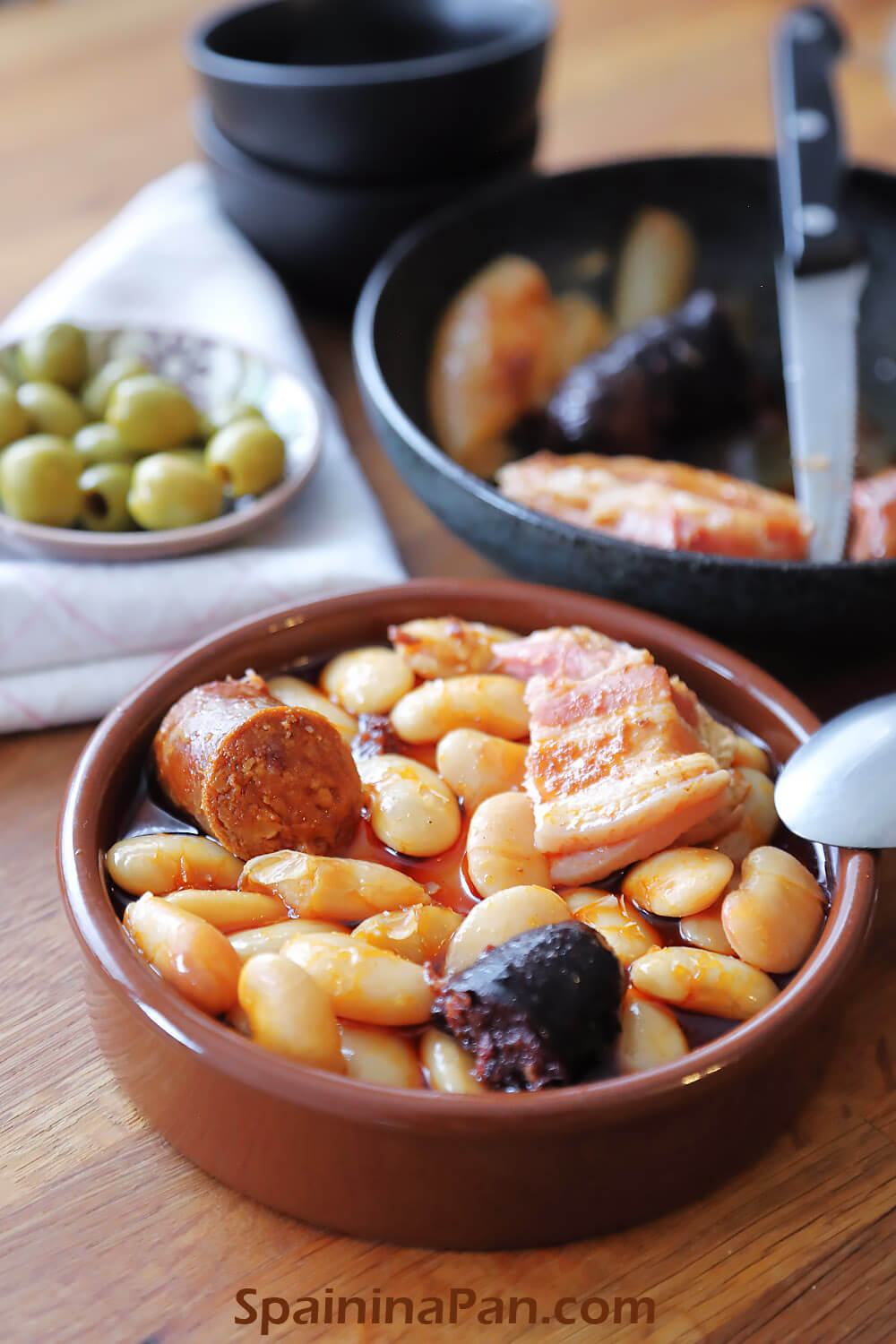
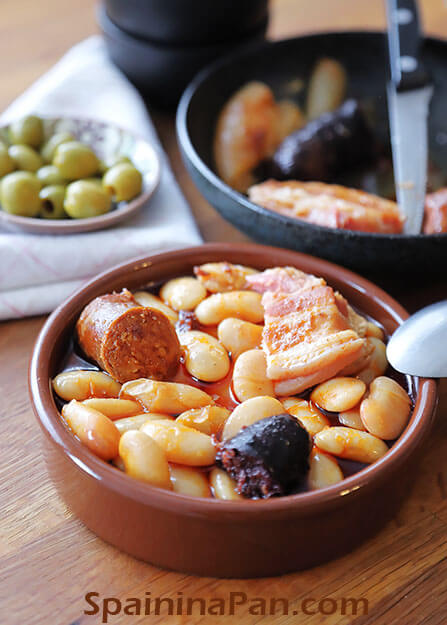
What Food is Fabada?
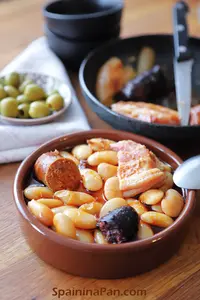
Fabada, or fabada asturiana, is an Asturian bean stew built around large white beans called fabes and a small group of pork meats that give the pot its hearty flavor.
A classic Spanish winter dish, rich and filling and perfect for people who want real food rather than something light and forgettable.
Beans, chorizo, morcilla, pork belly or panceta, and ham or lacón, which is cured pork shoulder, are the main ingredients. That combination is the heart of the traditional recipe from Asturias.
What makes the authentic version special is not fancy technique. It’s restraint. We do not load the pot with tomato, carrots, paprika by the spoonful, wine, herbs from all over the garden, or hot spices just because we can.
In Asturias, the flavor should come mainly from the fabes and the compango, the meats cooked with them.
The broth turns silky from the beans themselves, and that texture is one of the signs you are on the right track. For me, that is the soul of the best fabada recipe.
Let's Make the Recipe for Fabada Asturiana!
Ingredients for 4 servings
Preparation: 10-15 minutes
Cooking: 2 to 3 hours for tender fabes and meat over a medium-low fire.
*Measurements in metric and USA Imperial system. For British/Canadian measurements, please use the metric conversion calculator.
- 500g de fabes/fabas (or butter beans, judiones, granja or cannellini beans)
- 1 tbsp sweet paprika
- 40 ml olive oil (or 2 tablespoons)
- 1 Asturian chorizo (or other Spanish-style cured chorizo)
- 1 Asturian morcilla (or another firm type of blood sausage)
- 200 g cured pork shoulder (optional)
- 200 g salted or cured pork belly (panceta)
- 1 medium onion, peeled
- 2 garlic cloves
- 2 sprigs of parsley (optional)
- Seasalt
Put the white beans in a bowl and cover with water, making sure the water comes about 2 inches above the beans. Leave to soak for 12 hours or overnight. The next day, drain the beans.
Step-by-Step Instructions
- Put the beans in a large cooking pot. Add the pork belly, morcilla, chorizo, onion, garlic, and olive oil. If using, add the pork shoulder and parsley as well.
- Pour in enough cold water to cover everything by about 1 inch. Add the sweet paprika and bring to a boil.
- Lower the heat to a gentle simmer. Cover and cook for 2 hours. Make sure the beans remain submerged in the liquid. Do NOT stir the beans!
- After 2 hours, uncover and skim off any foam or impurities from the surface. Taste the broth and add salt if needed. Gently shake the pot from side to side to help thicken the broth without breaking the beans. Cover and continue to simmer for another 30 minutes.
- Take one bean and bite into it. It should be completely tender and creamy inside. If not, continue to simmer for another 15 minutes.
- Cut up the meats and either serve them on a separate tray or return them to the pot. Serve hot.
TIPS:
- Do not stir the stew, instead shake the pot from side to side.
- Use low heat.
- Some Asturian families use parsley sprigs and saffron but they're not traditional ingredients.
- Keep the beans submerged in water at all times during the cooking process.
- Always keep the pot covered.
- Always be mindful of the salt content. After 2 hours taste the broth and only add salt if needed.
What You Will Need
- Large cooking pot
- Ladle
- Tablespoon
- Meat knife
- Paring knife
- Cutting board
- Measuring beaker
- Pitcher
- Scale
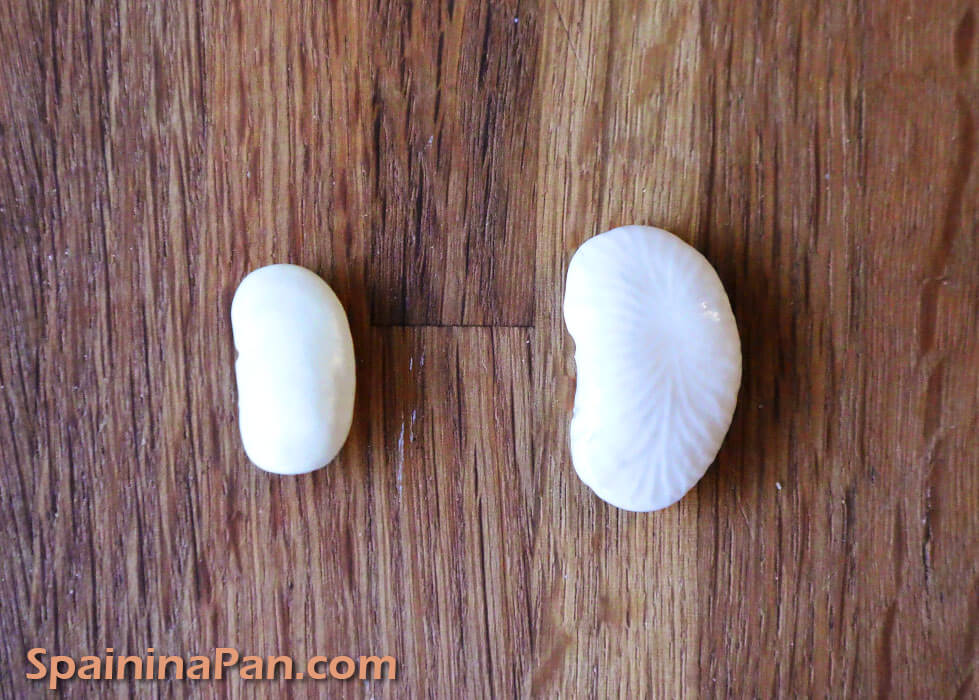 Size comparison, before and after soaking fabas beans.
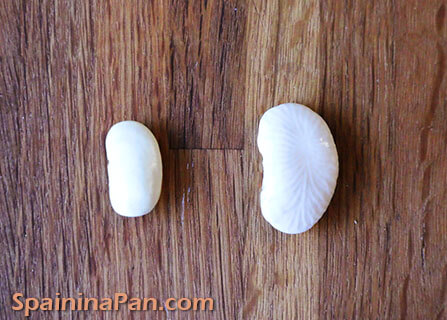 Size comparison, before and after soaking fabas beans.
What can Save You Time?
I can imagine you're pressed for time but still want to enjoy a hearty and satisfying bowl of fabada.
There's a way. Just use jarred or canned fabes, butter beans, or another large white bean similar to them. In about 45 minutes, you can have fabada just the way you like it.
Follow the same steps above, except for the soaking, since cooked beans don't need soaking, and set the cooking heat to medium.
In the last 10 minutes, taste the broth and adjust with salt if needed.
What are Some Tips for Serving Fabada?
As for serving, keep it simple. This is not a dish that needs decoration or trendy extras.
Among the best tips for serving fabada is this one: serve it hot in deep bowls or cazuelas, with crusty bread and maybe a simple green salad with tomato on the side if you want something fresh.
Some families serve the beans and broth first, then slice the meats and put them on a plate to share.
Others cut up the meat and return it to the pot, or simply keep everything together in one bowl. It's perfectly normal, and feels generous and homey.
As for drinks, natural sidra is the traditional option, but a young red wine does well too. A fruity wine complements the hearty dish well.
How to Cook Fabada Where You are?
TIPS:
- After 2 hours of cooking, skim off any foam from the top with a large spoon.
- Salt needs a little common sense here. Because chorizo, morcilla, ham, pork belly, and lacón can all bring salt, I always wait until 2 hours have passed to season. Sometimes the pot needs none at all.
- You may not live in an area where Spanish products are easily available. If you cannot get Asturian fabes, use the best large dried white butter beans you can find, preferably ones with thin skins and a creamy interior. Spanish judiones or granja beans can work well, and even cannellini beans can give you a good result.
- If Asturian chorizo is unavailable, choose a mild Spanish-style cured chorizo. Avoid smoked ones with strong spices unless there's nothing else. Some chorizos can be overpowering. Same with morcilla (blood sausage). There are lots of different kinds, so look for a mild one.
- After 2 hours of cooking, take a bite of a bean to see if it needs more time. The bean should be completely tender and creamy inside, not firm or chalky.
- If authenticity is a concern, I'll eventually include online stores here where you can buy Spanish ingredients at a reasonable price!
You can make a very good pot of fabada outside Spain. I've done it, and so can you. Enjoy this classic!
Where Things Can Go Wrong?
Understand that fabada really needs time to cook slowly, at least 2 hours, but 2.5 hours is better. If it doesn't bother you, go for 3 hours.
One of the best things about fabada is how little you need to interfere. Don’t stir the pot hard with a spoon, because the beans can break.
Instead, hold the handles and give the pot a gentle shake so the broth moves and thickens naturally. If the water level drops too much, add a bit more water.
Not adding that extra water is going to leave part of the beans uncooked.
The goal is a rich, silky broth, not a dry pot. By the end, the beans should feel soft and velvety, and the meats should have shared their flavor with everything.
Make sure to soak the beans for at least 12 hours, preferably overnight.
Many people, including myself, think fabada is even better the next day. When the dish really comes together and becomes the best fabada recipe in your kitchen.
*****
Edu's Rich Pork Stews
Recent Articles


-
Best Fabada Recipe - Authentic Asturian Bean Stew
 Discover the best fabada recipe: a rich, authentic Asturian bean stew with chorizo, morcilla and pork. Easy step-by-step guide for perfect results every time.
 -
Easy Spanish Chicken and Eggs Soup
A comforting Spanish chicken and eggs soup recipe. Simple ingredients, great flavor and ready in under an hour. -
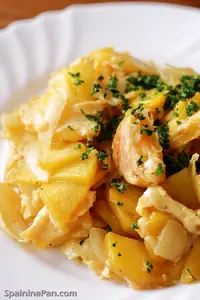
Spanish Scrambled Potatoes | Easy 20-Min Recipe
Spanish scrambled potatoes with a crispy, golden finish. This easy 20-minute recipe delivers natural, authentic flavor with simple ingredients.



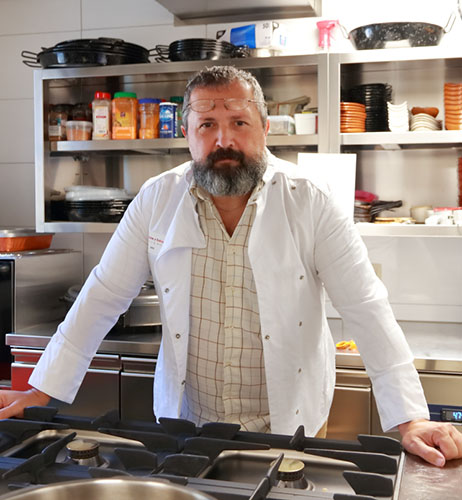
Hello there! I'm Edu, and I'm here to share my Spanish recipes for you to enjoy! As a cook, I love sharing my heritage through food, featuring the dishes our parents and grandparents made in Spain. From time to time, I still discover new culinary creations. Join me on this flavorful adventure and explore the delicious world of Spanish cuisine!