- HOME
- Seafood Recipes
- Chickpea Seafood
Easy Spanish Chickpea and Seafood Stew
(Garbanzos con Mariscos)
By Edu Valor / Author - Spanish Chef
If you love the food of Spain, let me put a real favorite on your table: Spanish chickpea and seafood stew. You would gladly order it in a small Andalusian restaurant after a long walk by the sea.
Chickpeas
have deep roots in the country, just like seafood. So bringing them together feels
natural. It feels generous because it's packed with protein and flavor.
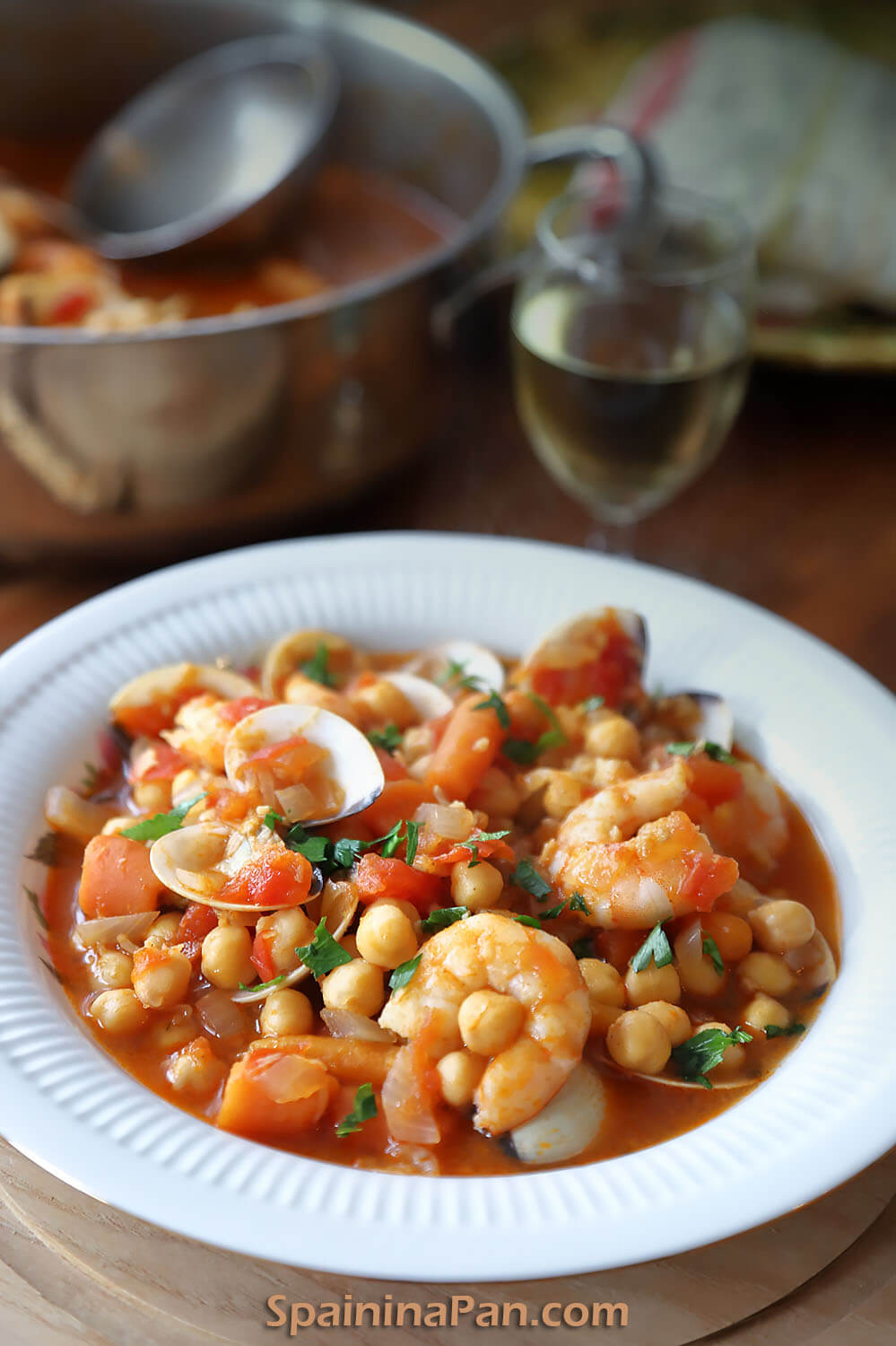
You see variations of
this dish especially in southern Spain, where cooks have long worked with what
the pantry and the coast gave them: calamari, langostines (prawns), and fish (cod, hake, etc.) are among the most important.
A handful of legumes
stretches the meal, while fish or shellfish brings luxury without needing a
high budget. That balance is very Spanish. We know how to make modest
ingredients behave like royalty.
What Makes or Breaks the Recipe?
If I were to make this
at home for you, I would tell you the soul of the dish is not just the seafood.
It is the sofrito and the broth.
Many Spanish chefs say the same but in different words: get the base wrong and the stew never quite wakes up.
So we start with olive oil, onion, garlic, maybe leek if I have it, and often red pepper. Then tomato and wine go in and cook down until it loses that raw edge. A pinch of pimentón, sweet or smoky, with cumin brings warmth and color.
Sometimes a little saffron joins the
party to make it even more "Spanish", or if I want to let them know where I'm from without saying it.
Let's Make a Fine Chickpea and Seafood Stew
Ingredients for 4 Servings
Preparation: 20-25 minutes
Cooking: 30 minutes
*Measurements in metric and USA Imperial system. For British/Canadian measurements please use the metric conversion calculator.
- 600g canned/jarred chickpeas, drained
- 250g shrimp, peeled
- 350g Venus clams or similar
- 150g canned/jarred baby carrots
- 2 ripe tomatoes, diced
- 1 sweet onion, diced
- 2 garlic cloves, minced
- 500ml fish stock
- 3 tbsp olive oil
- 100 ml dry white wine
- 1 tsp sweet or smoked paprika (substitute with 1-2 ñoras if available)
- ½ tsp ground cumin
- 1 small handful chopped parsley
- Salt and pepper
Put the clams in a pot of salted water (taste to
make sure) to let them open and remove impurities. Remove the clams, change the
water, and salt it again. Put the clams back in the pot of salted water to clean
them again. Drain, rinse, and put the clams in a separate tray.
Step-by-Step Instructions
- In a large frying pan, sauté the onions and garlic in the olive oil until they’re soft and glazed.
- Add the tomatoes, stir a few times, and let the juice evaporate. Then add the paprika and cumin, and stir them in.
- Pour in the white wine and cook for a couple of minutes, then add the chickpeas and fish stock. Stir to combine. Taste and season.
- Bring to a boil, then lower to medium heat. Cook for 10-12 minutes.
- Add the Venus clams, stir, and cover. Cook until all clams are open, about 5-10 minutes.
- Add the shrimp, stir, and cook for 4-5 minutes.
- Garnish with the parsley.
TIPS:
- If you're going to use pre-soaked (12 hours or overnight) chickpeas, boil them for 40- 45 minutes first.
- Brown the tomatoes if you like the taste.
- When using ñoras, pierce them a couple of times with a knife first, then add them to the tomato sauté.
- You can use fish fumet or fish broth too.
- Sometimes they add diced squid to this dish.
What You Will Need
- Large frying pan
- Paring knife
- Spatula
- Ladl
- Scale
- Measuring beaker
- Sieve
What are Those Typical Spanish Ingredients?
One special ingredient that sometimes appears in Spanish cooking is the ñora. Don't confuse it with the pimiento choricero, another special ingredient. Both go very well with the chickpea and seafood stew.
It's a small, round, dried dark pepper used in many parts of Spain. It gives depth, sweetness, and a slightly earthy, almost sun-dried flavor that is hard to fake perfectly.
Usually, we soak it, scrape out the flesh, and stir that into the sofrito or broth. If you cannot find ñora, do not panic and do not abandon the stew dramatically like an actor in a bad telenovela.
You can substitute with a good sweet paprika or maybe with a little flesh from rehydrated dried peppers available where you are.
Choricero pepper is another good candidate, though the
flavor will be a cousin, not a twin.
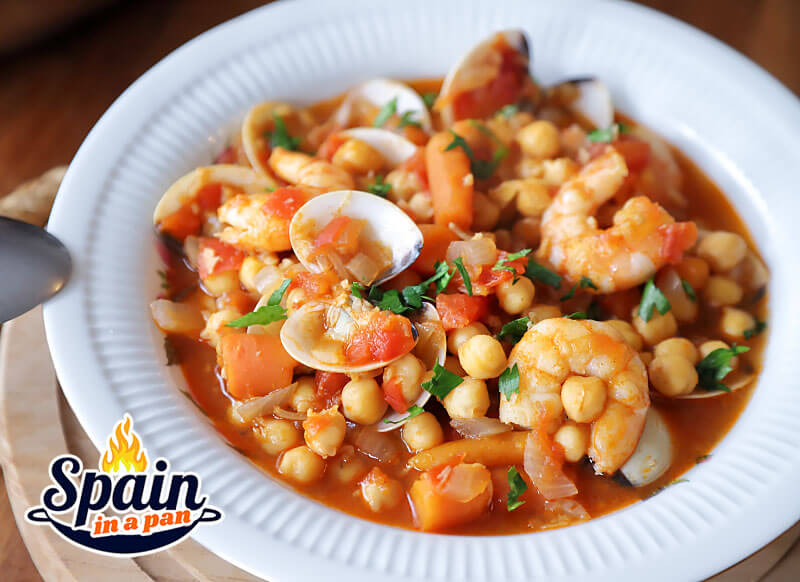
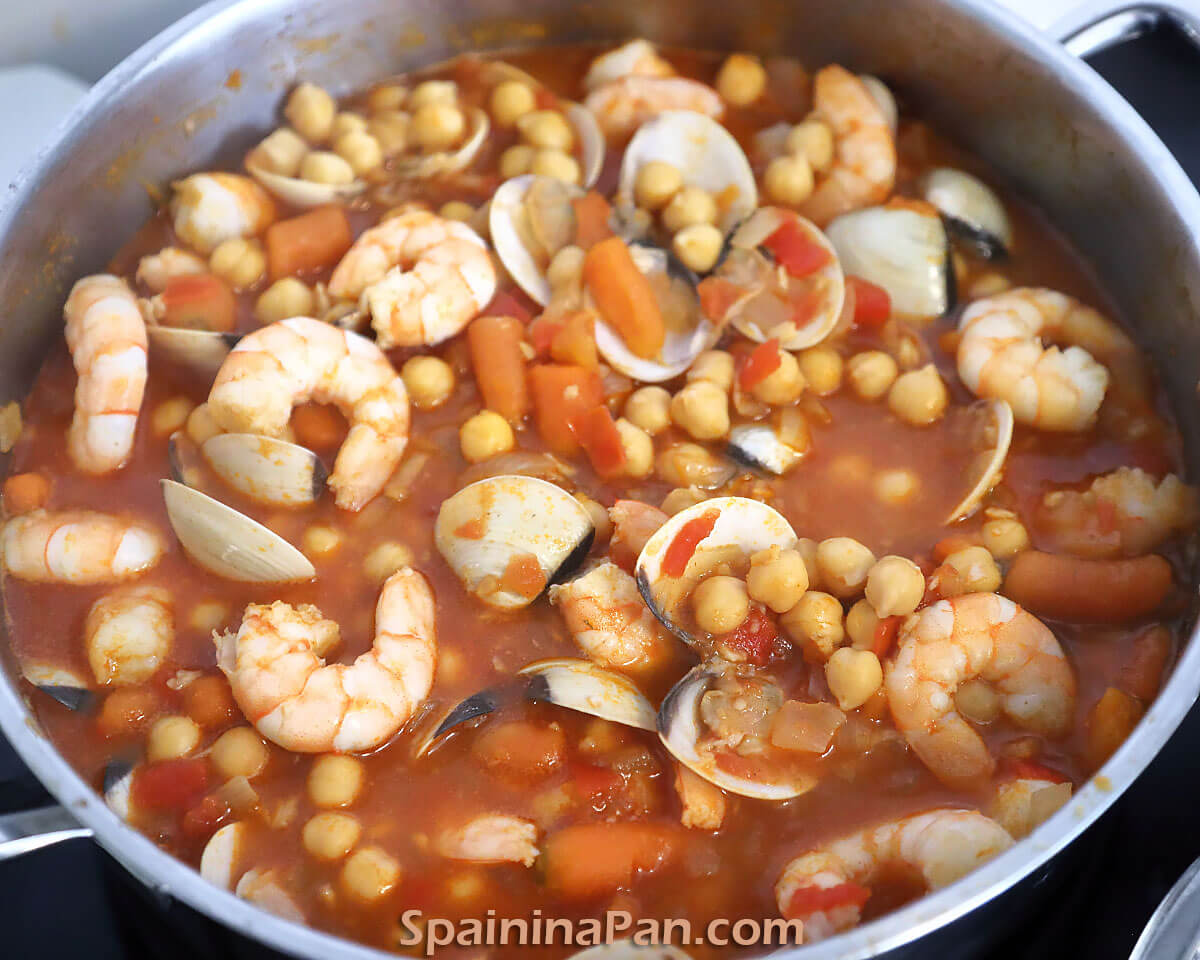 Creamy chickpeas and tasty seafood.
 Creamy chickpeas and tasty seafood.
What are Some of the Varieties of this Spanish Chickpea and Seafood Stew?
Seafood is where this
stew becomes wonderfully flexible. You can make it with shrimp, prawns,
mussels, clams, chunks of firm white fish, squid, or a mix of several.
In Cádiz or Huelva, cooks often lean into what is local and fresh, and that changes with the season and the market.
Squid gives a lovely marine richness. Fish makes the stew softer and more delicate. Shellfish adds sweetness and that irresistible sea aroma.
If I am cooking this dish for friends, I like combining the chickpeas with prawns and a little squid, then finishing with pieces of hake or monkfish near the end so nothing overcooks.
What is the most appetizing combination to you? The good thing is, you can't go wrong!
Are you in Spain or are you Planning to Visit the Country?
If you are travelling
in Spain and want to try related dishes in restaurants, I would look in
Andalusia, especially in coastal towns where the menu follows the market more
than fashion.
Ask about garbanzos con marisco, garbanzos con choco, or chickpea stews with pescado del día, the fish of the day.
Not every place will use the exact same name, and that is normal. Sometimes the best version is not in the glossy tourist center at all but in a simple comedor where workers eat lunch.
I always tell people: if the bread is good, the room is a little noisy, and someone’s aunt seems to be in charge, your odds improve nicely.
What I love most about Spanish chickpea and seafood stew is that it fits real life. It is comforting after a hike or a cool day outdoors. It is special enough for a weekend lunch with family.
It can be made a little luxurious with more shellfish or kept affordable with mostly chickpeas, a bit of squid, and one good fillet of fish.
And once you make it once or
twice, you stop seeing it as a recipe and start seeing it as a framework. That
is when Spanish home cooking really gets fun.
*****
Edu's Tasty Seafood Recipes
*****

Recent Articles


-
Easy Spanish Chickpea and Seafood Stew
 Discover a delicious Spanish chickpea and seafood stew with tender chickpeas, fresh seafood, and rich Mediterranean flavors in every bite.
-
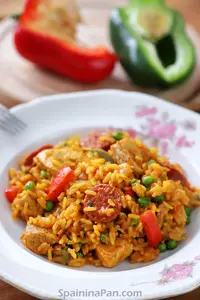
Spanish Chicken and Chorizo Paella Recipe | Easy & Flavorful
 Savor authentic flavors with this easy chicken and chorizo paella. Smoky chorizo, tender chicken, and saffron-infused rice.
-
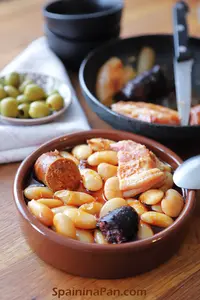
Best Fabada Recipe - Authentic Asturian Bean Stew
Discover the best fabada recipe: a rich, authentic Asturian bean stew with chorizo, morcilla and pork. Easy step-by-step guide for perfect results every time.


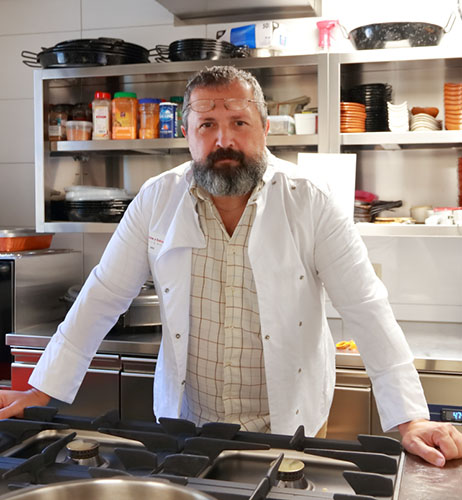
Hello there! I'm Edu, and I'm here to share my Spanish recipes for you to enjoy! As a cook, I love sharing my heritage through food, featuring the dishes our parents and grandparents made in Spain. From time to time, I still discover new culinary creations. Join me on this flavorful adventure and explore the delicious world of Spanish cuisine!