- HOME
- Seafood Recipes
- Monkfish Currito
Spanish Monkfish Currito Recipe – A Rustic Seafood Dish Foodies Crave
(Rape á la Currito)
By Edu Valor / Author - Spanish Chef
I found the monkfish a la Currito recipe in an old cookbook that had been sitting in my library for ages. When I saw the photo of the dish, I immediately thought this must be a fisherman’s dish from the north.
I’ve seen so many seafood dishes over the years, I recognised the style right away. And I was right, it is a traditional fisherman’s recipe from the Basque Country.
Coastal communities have been preparing fresh fish with simple sauces for centuries.
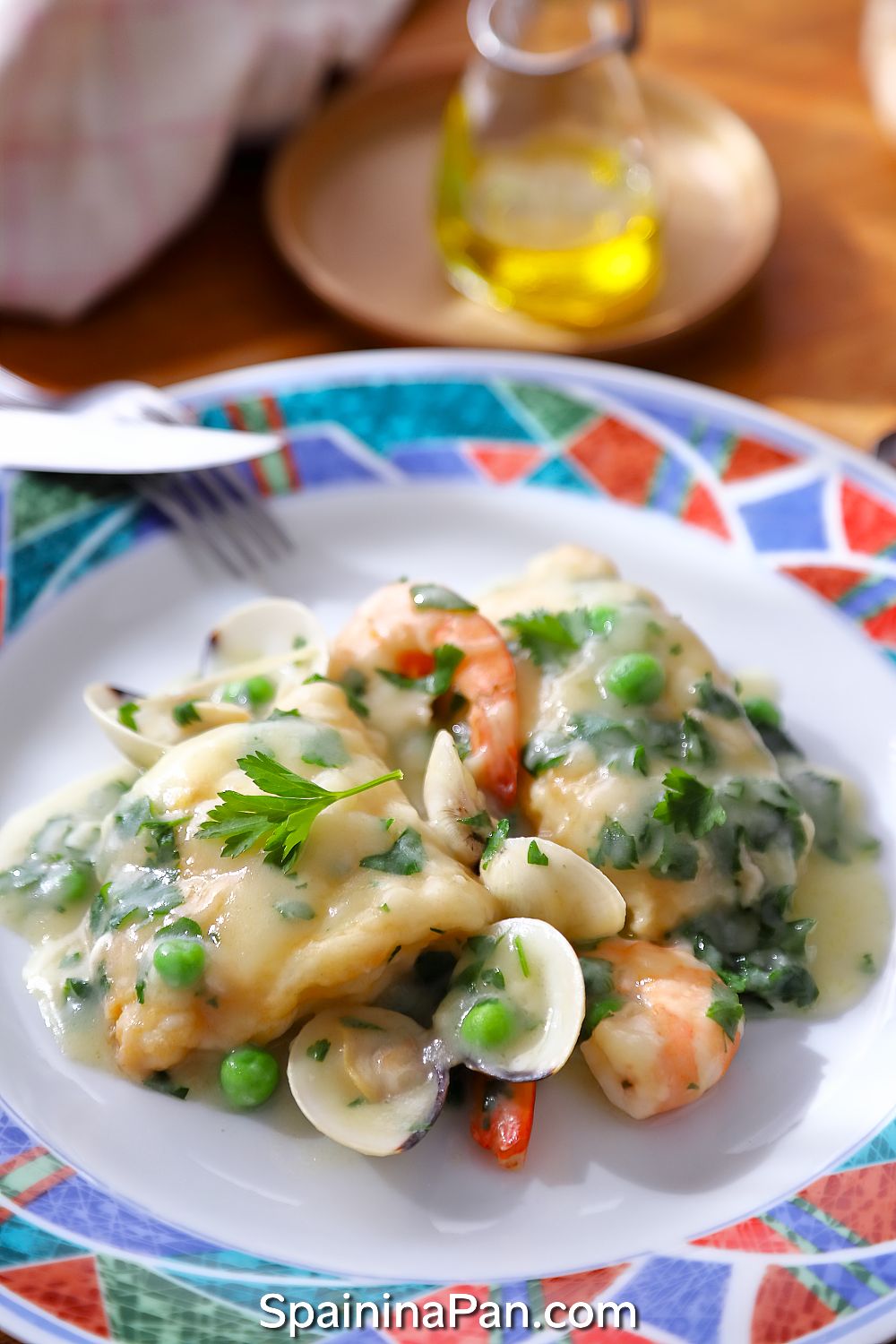
Easy to prepare but still delicious to a level that reminds you of fine dining. Monkfish is one of those fish that works perfectly in this recipe. Its firm texture keeps it tender and prevents it from falling apart while cooking in the sauce.
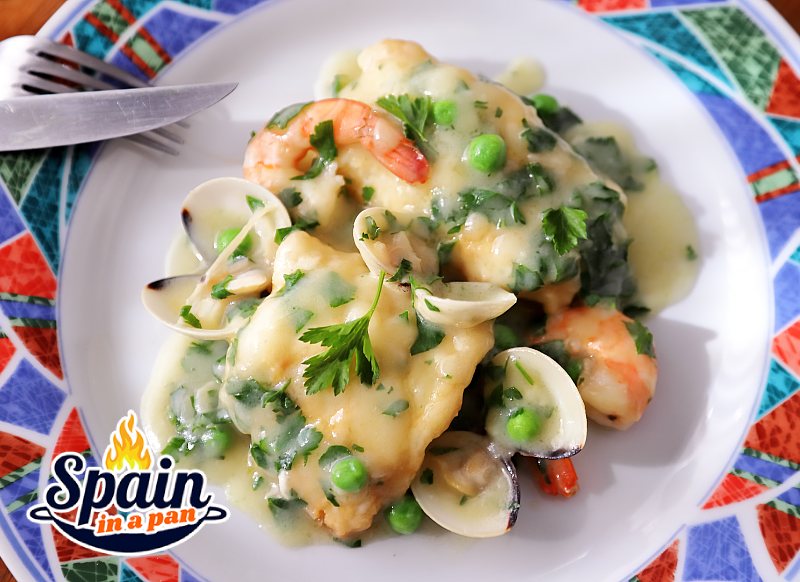
The fish is lightly fried first, then finished in a green sauce made with garlic, parsley, and shellfish.
That technique allows the absorption of flavors while keeping its structure. The result with this monkfish currito recipe feels both rustic and refined at the same time.
The Traditional Technique Behind This Santurtzi Seafood Classic
What makes this dish so interesting is the cooking method, which follows a very traditional Basque seafood technique.
First, the monkfish pieces are lightly coated in flour and egg and briefly fried in olive oil. This step seals the fish and gives it a light crust that later helps thicken the sauce.
In the same pan, garlic is gently sautéed and combined with parsley to create the aromatic base typical of northern Spanish seafood dishes.
A splash of fish broth or fumet is then added, forming a light sauce that carries the natural flavour of the sea.
The monkfish returns to the pan together with shellfish such as clams or prawns, allowing everything to simmer briefly until the sauce binds together.
It’s a straightforward process that shows how Basque fishermen relied on simple steps to extract maximum flavour from fresh, high-quality ingredients.
Let's Make a Fine Monkfish Currito Recipe
Ingredients for 4 Servings
Preparation: 20-25 minutes
Cooking: 30 minutes
*Measurements in metric and USA Imperial system. For British/Canadian measurements please use the metric conversion calculator.
- Monkfish 800 g / 1.75 lbs (approx. 28 oz), cut in 4 equal pieces
- Shrimp 8 pieces, peeled
- Venus Clams 12 pieces
- Green Peas 200 g / 1.2 cups (frozen or fresh)
- White Asparagus 4 pieces (jarred/canned), cut into pieces
- Olive Oil (or another frying oil)
- Salt to taste
Salsa Verde:
- Flat Parsley: 1 full handful, chopped
- Olive Oil: 100 ml / approx 7 tablespoons (roughly 1/2 cup minus 1 tbsp)
- All-Purpose Flour: 60 g / approx 1/2 cup (8 tbsp leveled)
- Fish Broth (or bouillon): 1 liter / approx 4.2 cups (standard 32 oz carton plus a splash)
- Garlic Cloves: 2 cloves, minced
- Salt and pepper to taste
Coating:
- Eggs: 2 medium, beaten
- All-Purpose Flour: 30 g / approx 1/4 cup
Step-by-Step Instructions
- Clean and cut the monkfish into 4 equal pieces. Prepare the fish broth (or bouillon) and set aside.
- Dust the monkfish pieces in flour and then coat with egg batter. Fry the coated monkfish in the olive oil on high heat briefly. This is a matter of seconds until lightly browned. Remove pieces from the pan and reserve.
- In the same pan, turn the heat to medium-low, add the garlic, chopped parsley, and stir. Immediately add the flour and make a roux. Stir until the flour is cooked and turns into a parsley-garlic paste. Note: Just keep an eye on the garlic here, it should be fragrant, not brown.
- Pour in the still-warm fish broth slowly while stirring. Make sure it turns into a creamy sauce without lumps.
- Immediately add the peas, asparagus pieces, shrimp, and clams. Season with salt and pepper to taste.
- Let the creamy mixture cook for a couple of minutes, or until the shrimp turn pink and the clams are just starting to open.
- Then add the fried monkfish. Let it simmer on medium-low heat for 4 to 5 minutes, covered. (Discard any clams that haven't opened after this time.)
TIPS:
- Substitute flat parsley with spinach if needed. Do not use curled parsley as it is too bitter.
- Keep the fish broth warm or hot.
- Sometimes the green sauce (salsa verde) is made in a separate pan.
- To make the fish broth yourself: Boil 1 chopped leek, ½ onion, 3 parsley sprigs, and fish remains (head, skin, bones, etc.) in 1 liter (~4.2 cups/1 quart) of water for 10 minutes. Strain!
- If the monkfish are thick pieces, cook a little longer.
- If you want, cook the shrimp shells for a few minutes in the fish broth and then strain.
What You Will Need
- Frying pan
- Meat knife
- Paring knife
- Bowls for dusting and egg coating
- Spatula
- Measuring beaker
- Scale
- Whisk or fork to beat the eggs
An Impressive Seafood Dish That’s Surprisingly Simple to Cook
What I love about this monkfish currito recipe is how approachable it is. At first glance, it looks like something you would order in a coastal restaurant, yet the preparation itself is straightforward.
The ingredients are simple, the steps are clear, and most of the flavour comes naturally from the seafood.
It’s the kind of dish that proves you don’t always need complicated techniques to cook something that tastes like fine dining.
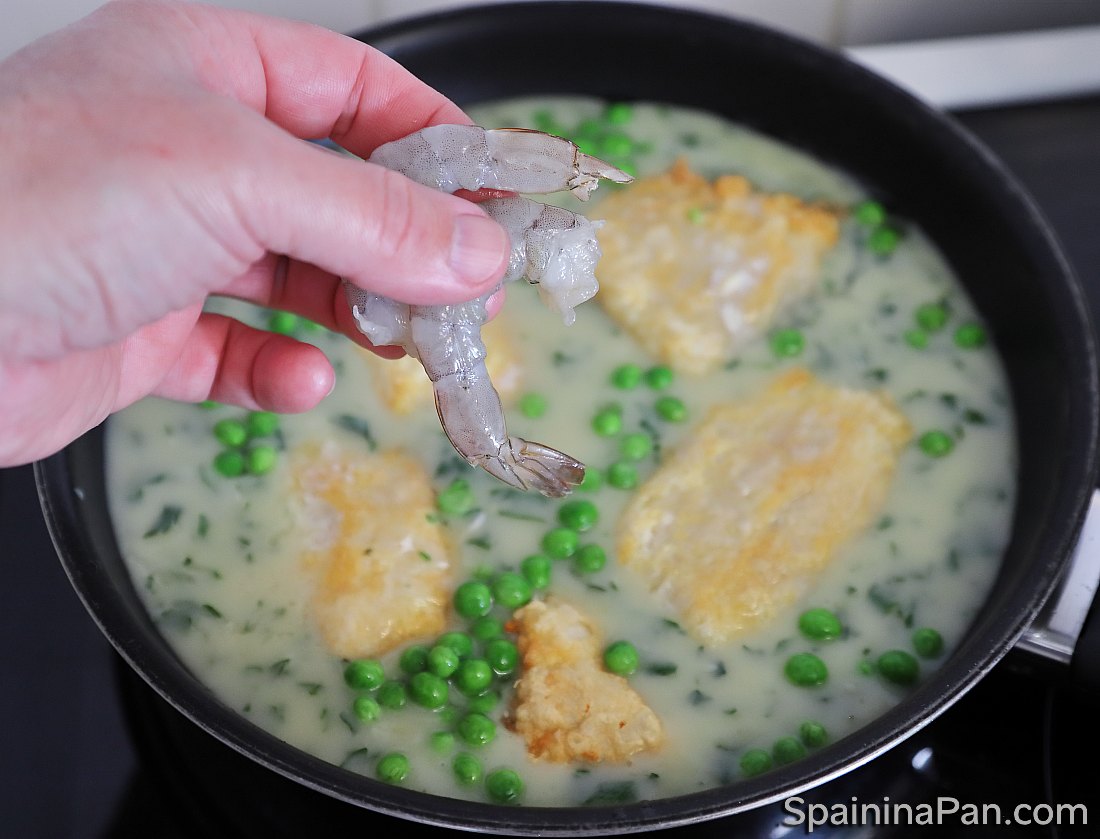
 Adding shrimp to creamy salsa verde.
Behind “Rape a la Currito” - A Fisherman’s Dish Turned Restaurant Legend
The dish takes its name from José María González Barea, a well-known chef from the fishing town of Santurtzi near Bilbao.
Locals knew him simply as “Currito,” and his seafood restaurant became famous for traditional Basque dishes.
His son, Emilio, grew up in the restaurant and learned from his father, continuing the family tradition of cooking local specialties.
The monkfish currito recipe likely grew out of fishermen’s cooking in the region, simple seafood prepared quickly with garlic, parsley, and the day’s catch.
Over time, it became associated with Currito’s restaurant, and the dish eventually took on his nickname. What started as a simple coastal meal ended up becoming a small legend of Basque seafood cuisine.
*****
Edu's Tasty Seafood Recipes
*****
Recent Articles


-
Best Fabada Recipe - Authentic Asturian Bean Stew
 Discover the best fabada recipe: a rich, authentic Asturian bean stew with chorizo, morcilla and pork. Easy step-by-step guide for perfect results every time.
 -
Easy Spanish Chicken and Eggs Soup
A comforting Spanish chicken and eggs soup recipe. Simple ingredients, great flavor and ready in under an hour. -
Spanish Scrambled Potatoes | Easy 20-Min Recipe
Spanish scrambled potatoes with a crispy, golden finish. This easy 20-minute recipe delivers natural, authentic flavor with simple ingredients.



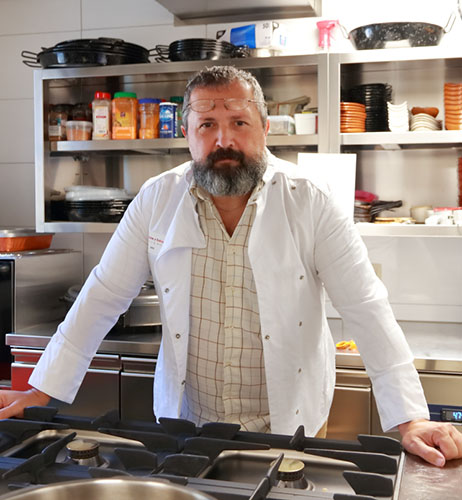
Hello there! I'm Edu, and I'm here to share my Spanish recipes for you to enjoy! As a cook, I love sharing my heritage through food, featuring the dishes our parents and grandparents made in Spain. From time to time, I still discover new culinary creations. Join me on this flavorful adventure and explore the delicious world of Spanish cuisine!