- HOME
- Spanish Desserts
- Christmas Doughnuts
A Real Traditional Spanish Christmas Doughnuts Recipe
(Rosquillas Navideñas)
By Edu Valor / Author - Spanish Chef
I have known the Spanish Christmas doughnuts recipe since the day I could walk. I would watch my mother make them just before Christmas Eve.
Besides the tempting boxes of mantecados and turron waiting in the cupboard, she couldn't help but make homemade pastries as part of the festive tradition.
There was no Christmas without them. There was something about making them while the family was home together.
Her specialty was actually pestiños, a honey pastry with a long tradition and a few variants, just like with the roscos (short for rosquillas). I never knew whether I preferred these, and I still don't. They're both just too good!
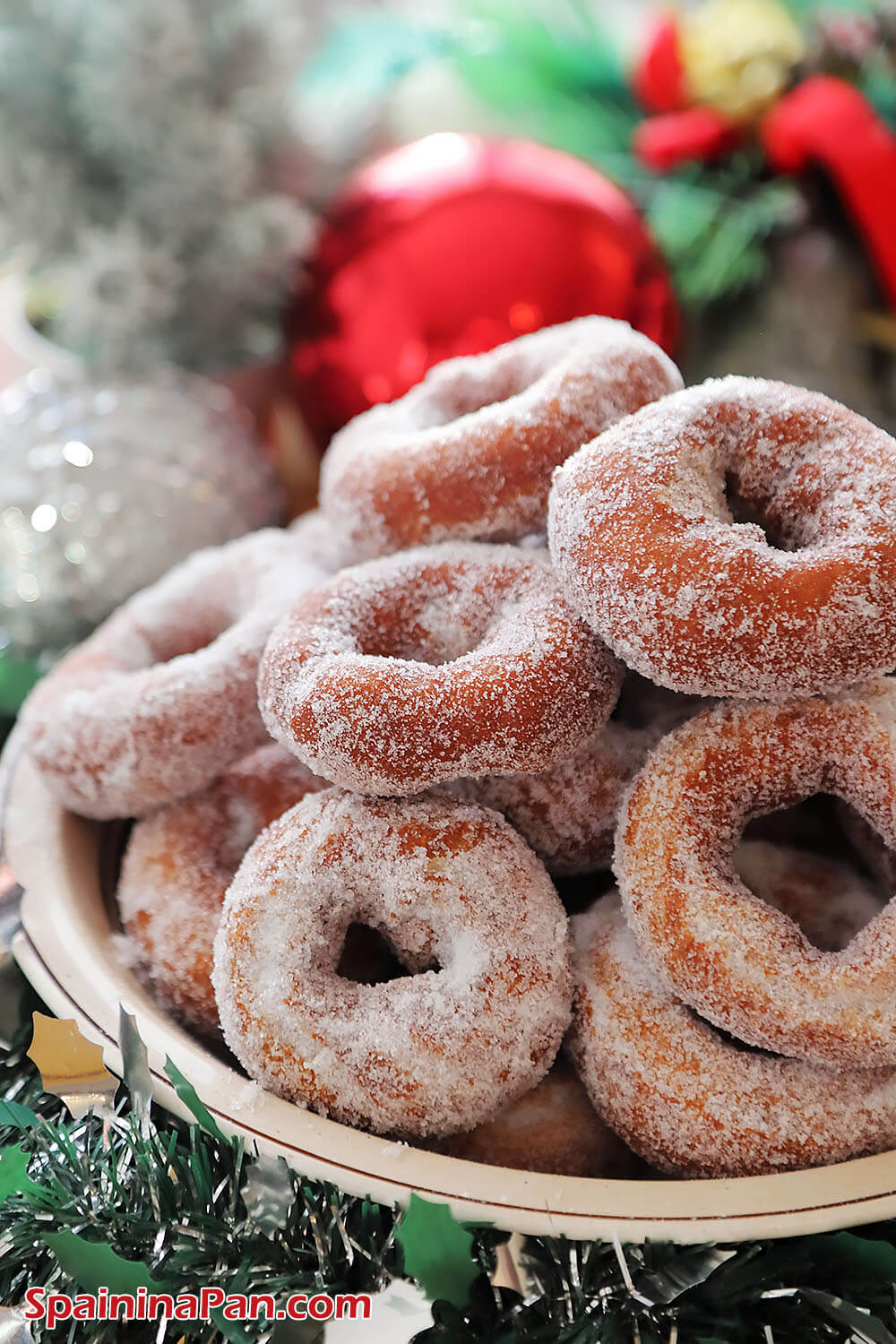
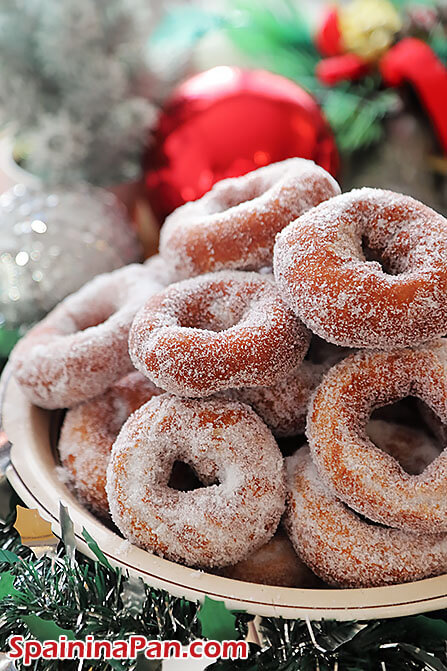
Years ago, we usually had the milk variant, which was made from a cross between a yeast and cakey dough. Much like a regular doughnut texture and covered with fine sugar.
You have the anis, milk, cream, and orange variety. Below you'll find the orange recipe. Over time, these became the most asked for. They're tender, cakey, and just plain delicious.
Let's Make Traditional Christmas Doughnuts
Ingredients for 15-20 Rosquillas
Preparation: 10-15 minutes
Frying: approx. 1-2 minutes.
*Measurements in metric and USA Imperial system. For British/Canadian measurements, please use the metric conversion calculator.
All ingredients at room temperature:
- 500 g / 4 cups cake flour (low-gluten pastry flour)
- 1 tsp baking powder
- 130 g / ⅔ cup fine sugar
- 7 tbsp neutral-tasting oil (sunflower, peanut, or similar)
- 3 large eggs
- 6 tbsp orange juice
- Zest of ⅓ orange
Extras:
- 1.5 liters / 6½ cups of frying oil (or more in a medium frying pan or deep fryer)
- 300–400 g / 1½–2 cups fine sugar, in a medium bowl
Step-by-Step Instructions
- In a large bowl, beat the eggs with the sugar and orange zest until smooth.
- Add the baking powder, oil, and orange juice. Whisk until fully incorporated.
- Begin whisking in the flour gradually. The goal is a soft dough that is slightly sticky but manageable. Avoid adding all the flour at once, some batches may need as little as 400 g, while others may require more or less.
- Switch to a spatula or wooden spoon as the dough thickens, then knead gently until smooth. Do not overwork. The dough should be tender and easy to handle. Lightly oil your fingers to prevent sticking rather than adding excess flour.
- Cover the dough and let it rest for 5–10 minutes.
- Heat the frying oil over medium heat until hot.
- Lightly dust a work surface with flour. With oiled fingers, portion off pieces of dough slightly larger than a golf ball. Pierce with your thumb and shape into a ring (similar to a doughnut). Place the shaped roscos on the prepared surface while continuing with the remaining dough.
- Fry the roscos in batches. Once they float to the surface, immediately turn them over. Continue frying until golden brown on both sides.
- Remove the roscos and drain briefly on paper towels. While still warm, roll them in the fine sugar to coat evenly.
TIPS:
- Lightly oil your fingers to prevent the dough from sticking while shaping.
- Vanilla extract or ground cinnamon may be added to the dough.
- The dough should remain soft and tender, not stiff.
- Use fine-grained sugar to coat the roscos; for a cinnamon finish, mix the sugar with 1 teaspoon of ground cinnamon.
-
This recipe does not require all of the flour; add only as much as needed to achieve the correct dough consistency.
What You Will Need
- Frying pan
- Bowls
- Whisk / spatula
- Paring knife
- Juicer
- Zester
- Measuring beakers
- Scale
Common Mistakes When Making this Spanish Christmas Doughnuts Recipe with Orange.
A common mistake when making rosquillas de naranja is adding too much flour. The dough should be soft and slightly sticky.
Too much will result in dry roscos instead of the tender, cake-like texture typical of this recipe.
Another frequent error is frying the rosquillas in oil that is too hot, which causes them to brown quickly on the outside while remaining undercooked inside. Conversely, oil that is not hot enough will make them greasy.
It is also important not to over-knead the dough,gentle handling keeps the crumb light. Over-kneading develops more gluten.
Finally, rosquillas should be coated in sugar while still warm; waiting too long will prevent the sugar from adhering properly.
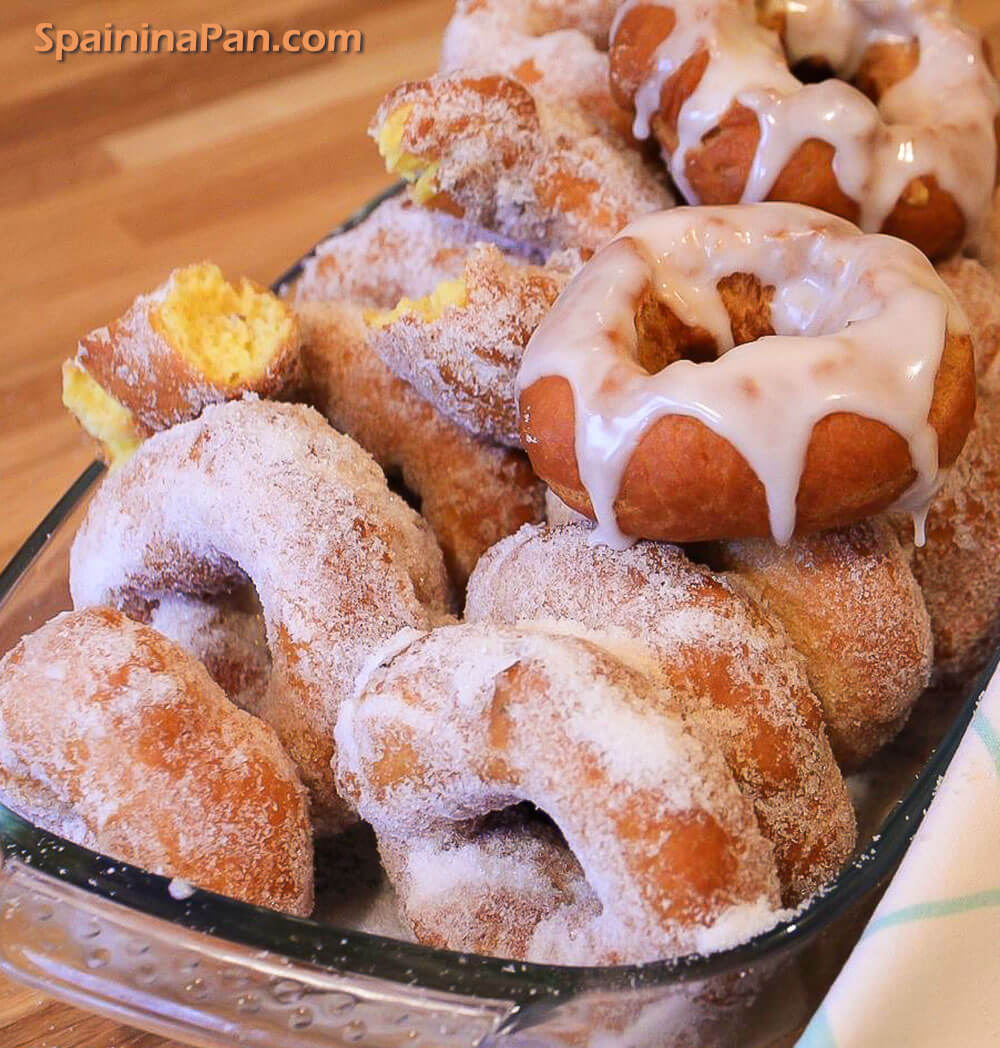 Same recipe but with added food dye. Note the yellowish color.
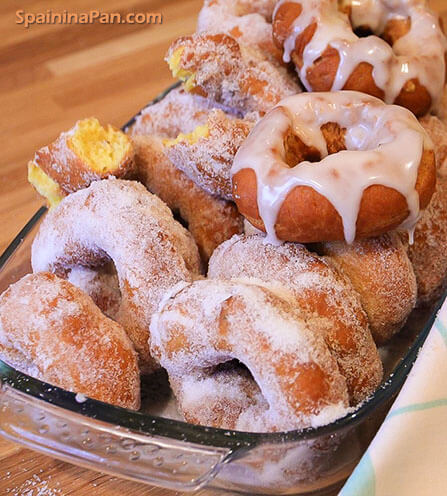 Same recipe but with added food dye. Note the yellowish color.
Choosing the Right Flour for Rosquillas
Using the right flour is crucial to attaining the soft texture characteristic of these traditional roscos. These types of rosuillas are made using low-protein (low-gluten) wheat flour.
This results in a soft cake dough rather than a bread-like texture. It is still possible to get a soft dough using all-purpose flour if the kneading is kept short. Nevertheless, using cake flour will give a more authentic Spanish doughnut texture.
When using all-purpose flour, it may be necessary to use less of it. The dough should still feel soft. This means it will be best to use just enough of it until it becomes workable.
This will give light roscos rather than doughnut dough that resembles a piece of bread. Instead, follow this recipe to a tee, and you'll have the best Spanish Christmas doughnuts recipe.
*****
Edu's Delicious Desserts
Recent Articles


-
Easy Spanish Chicken and Eggs Soup
 A comforting Spanish chicken and eggs soup recipe. Simple ingredients, great flavor and ready in under an hour.
 -
Spanish Scrambled Potatoes | Easy 20-Min Recipe
Spanish scrambled potatoes with a crispy, golden finish. This easy 20-minute recipe delivers natural, authentic flavor with simple ingredients. -
The Best Recipe for Torrijas from Spain!
Try the best recipe for torrijas from Spain. Learn how to make this classic treat at home in simple steps.



Hello there! I'm Edu, and I'm here to share my Spanish recipes for you to enjoy! As a cook, I love sharing my heritage through food, featuring the dishes our parents and grandparents made in Spain. From time to time, I still discover new culinary creations. Join me on this flavorful adventure and explore the delicious world of Spanish cuisine!