The Authentic Patatas Bravas Recipe from Madrid
(Patatas Bravas Pimentón)
By Edu Valor / Author - Spanish Chef
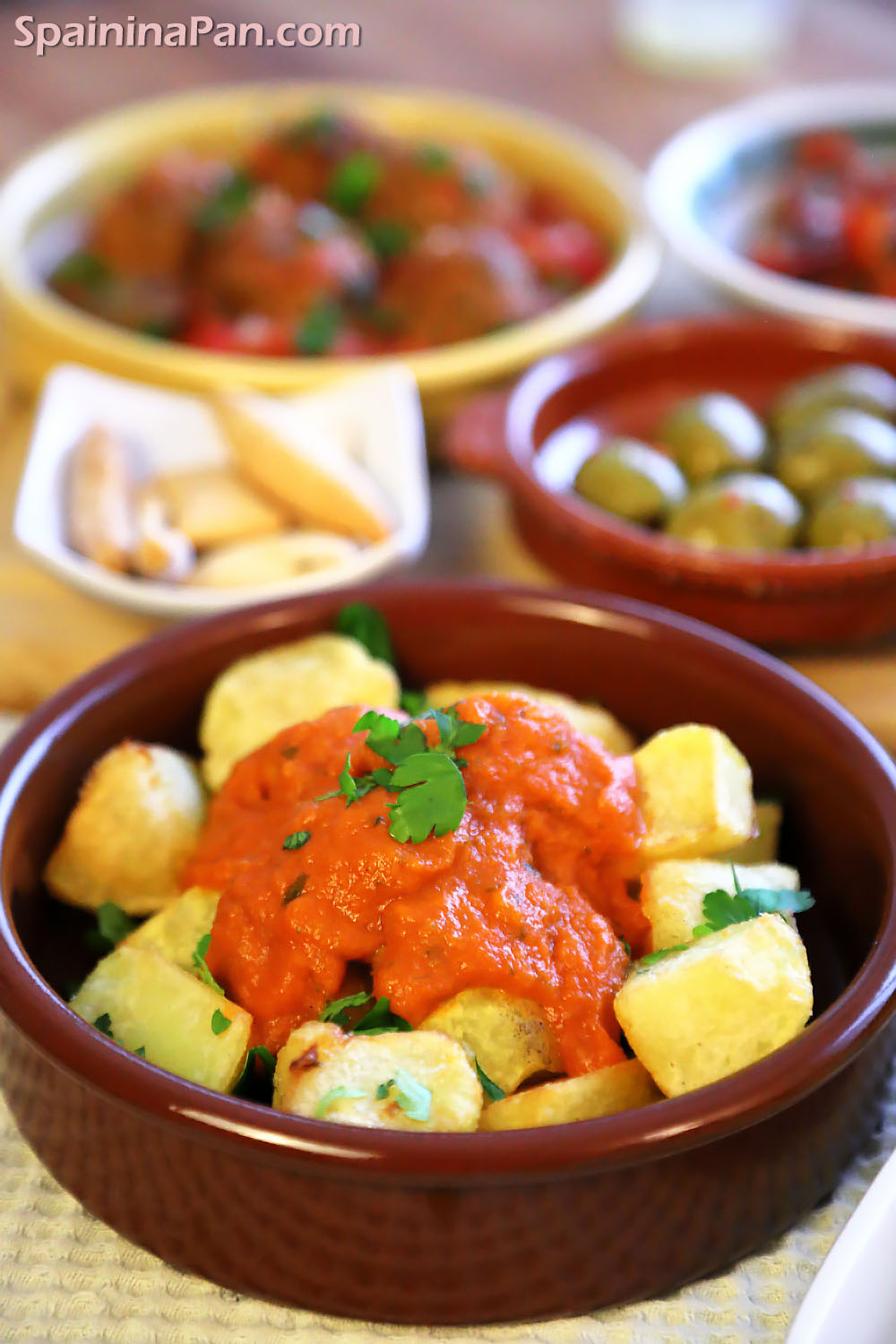
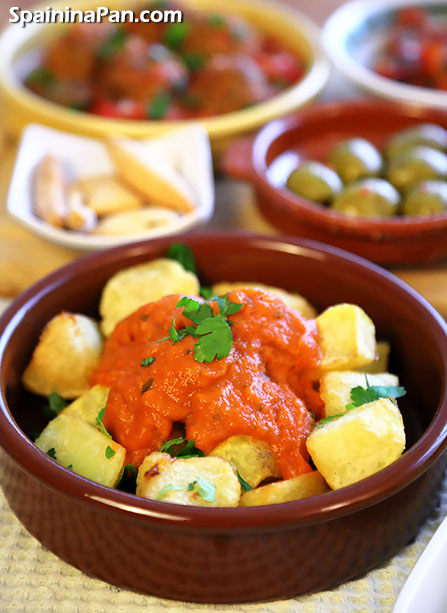
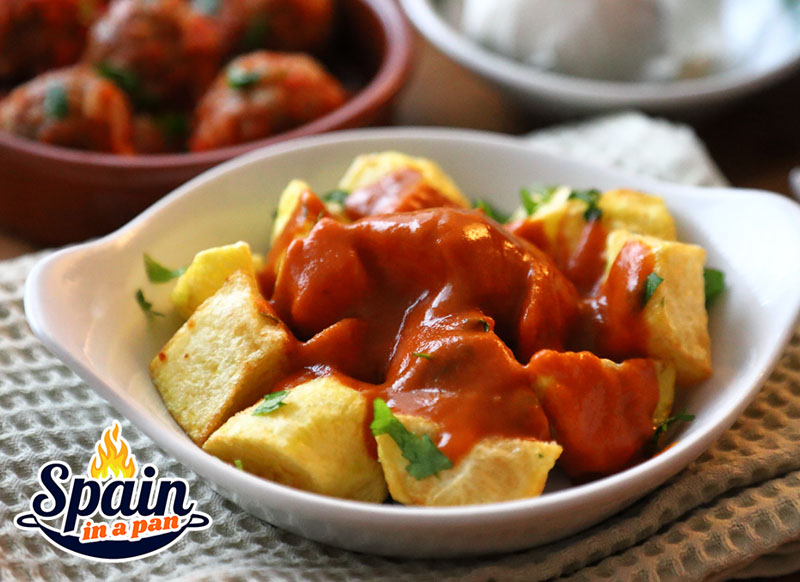
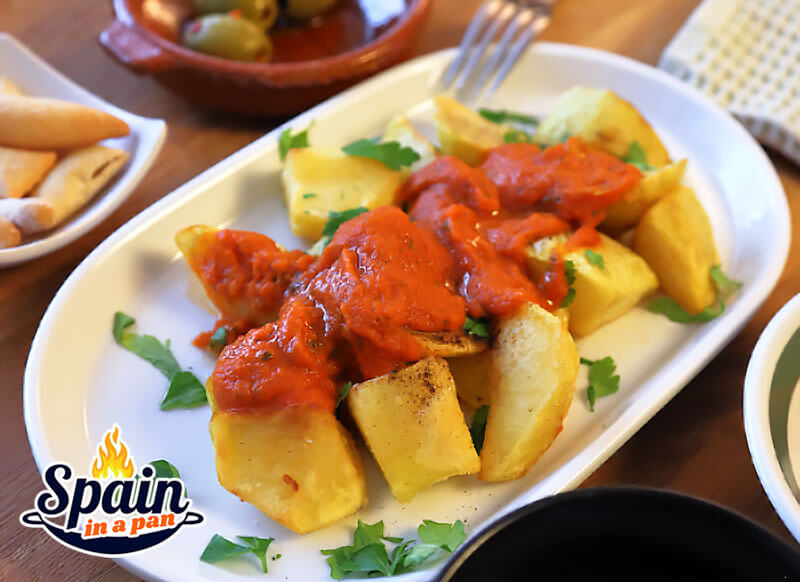
I’ve experienced firsthand how the spiciness of the patatas bravas recipe can vary. But they’re always easy to spot—chunks of fried potatoes topped with a reddish (sometimes orange) sauce.
Salsa brava typically comes in two versions: with and without tomato. Here you'll find the paprika-based one, considered the authentic recipe. Not that the tomato-based dish is of inferior quality. It's just different.
It’s usually mildly spicy, but in some places, you might need a “fire extinguisher”—something two of my friends learned the hard way during a lunch break.
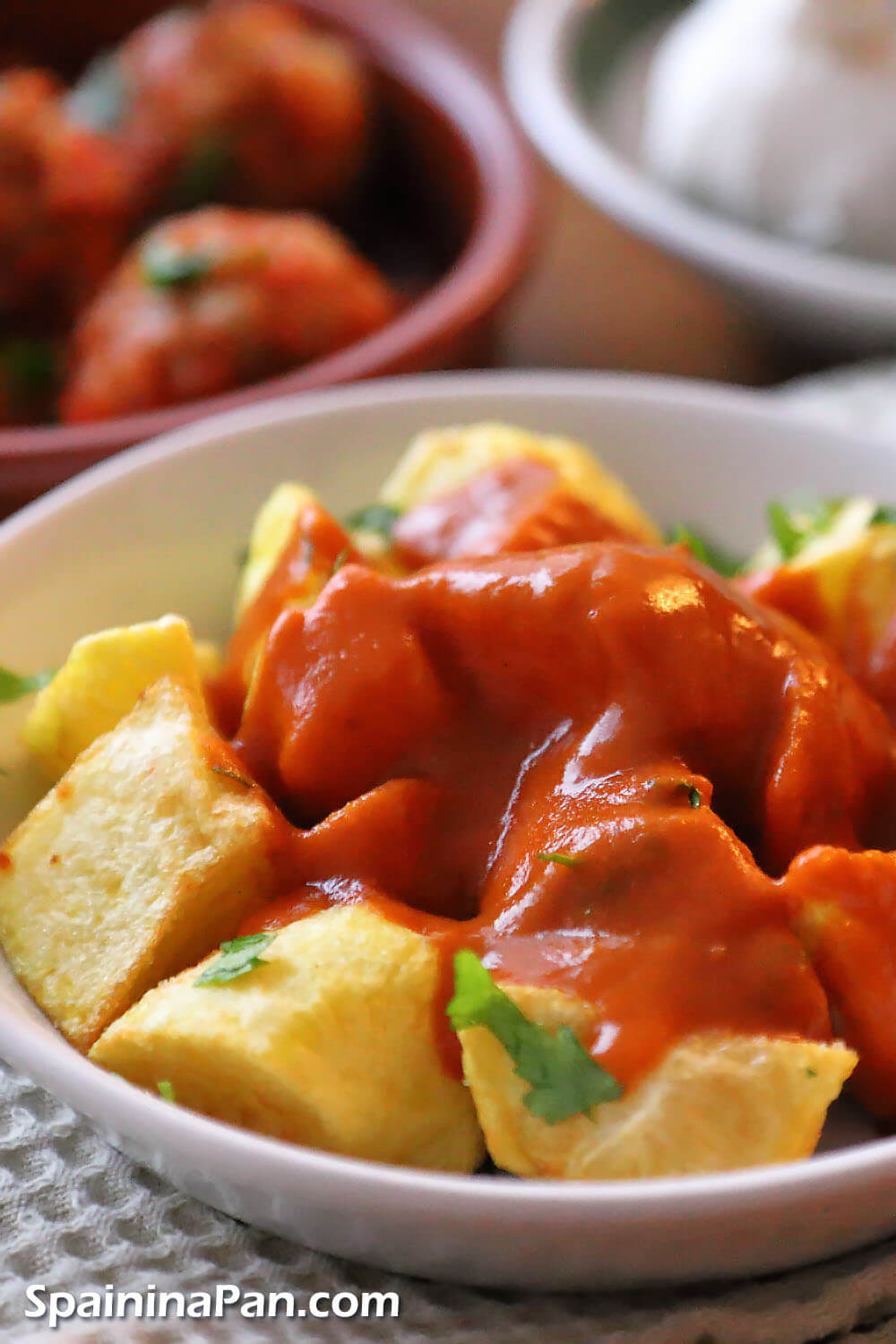
Ask the waiter to keep the sauce mild or "regular".
You may have seen or even tried patatas bravas while in Spain. It’s one of the most popular tapas dishes, found in almost every tapas bar and restaurant.
For a quick meal, try making this recipe! It doesn’t get much faster or easier. I like to pair it with a salad on the side. Other good sides are meat and fish.
Paprika-based Salsa Brava
Regardless of which version a restaurant serves, both recipes (with and without tomato) are worth trying. They have been part of the tradition for decades.
However, the authentic salsa brava does not contain tomato.
The paprika-based sauce in this iconic tapas dish has a smoky flavor, thanks to Spanish pimentón. You could use any smoked paprika, but fans go for pimentón de La Vera.
This protected paprika can only be made from specific pepper varieties grown in La Vera, Cáceres, Spain.
You can, of course, always make the sauce using regular smoked paprika.
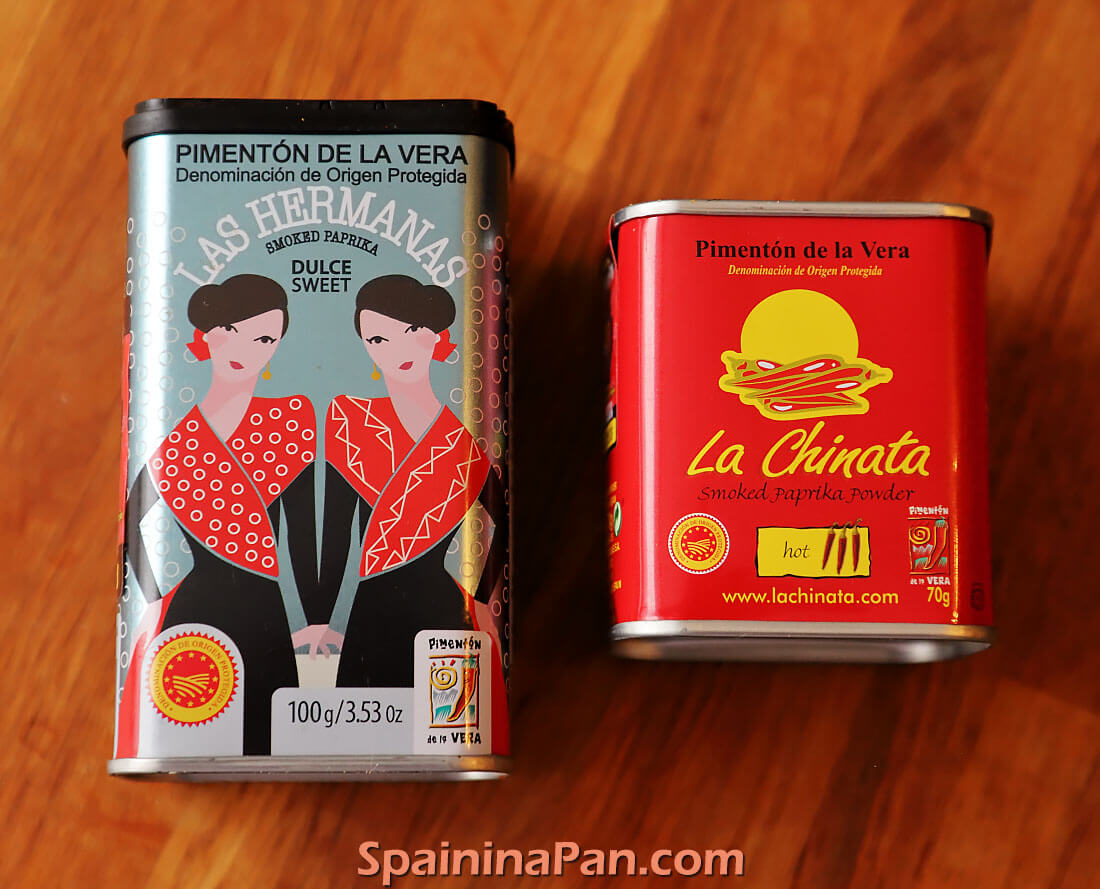 Pimentón de La Vera, hot and sweet smoked paprika.
 Pimentón de La Vera, hot and sweet smoked paprika.
Culinary experts generally agree that the authentic patatas bravas originated in Madrid. But even there, you'll find different versions of the tapa.
Some variations include tomato salsa brava, garlic mayo (allioli), a type of tartar sauce, or other additions. Personally, I stick to the traditional version made with salsa brava—the red ( sometimes orange) sauce.
These have been around since the 50's, and later came the tomato-based salsa brava.
Typically, there are two main recipes in Madrid: one made solely with paprika and another that combines paprika (or bell pepper) with tomato. One essential feature, however, is the spiciness, regardless of what is added.
After all, that's why they're called patatas bravas—meaning wild, or spicy potatoes!
Let's Make the Patatas Bravas Recipe.
Ingredients for 4 Servings
Preparation: 10-15 minutes
Cooking: approx. 25 minutes
*Measurements in metric and USA Imperial system. For British/Canadian measurements please use the metric conversion calculator.
- 750 g / 1.5 lb floury potatoes, cut large chunks
- 1 onion, finely diced
- 1 garlic clove, minced
- 2 tsp spicy paprika
- 1 tsp smoked paprika (or regular)
- 200 ml / 6.5 fl oz chicken broth
- 1½ tsp all-purpose flour
- 3 tbsp olive oil
- 1-2 tsp white wine vinegar
- salt
Step-by-Step Instructions
The Potatoes:
- Peel the potatoes and cut them into large chunks, about the size of a golf ball.
- Heat oil to 300°F (150°C) and fry the potatoes for 6 minutes.
- Remove them from the pan and set them aside to cool.
Paprika Salsa Brava:
- Heat olive oil in a pan over medium heat.
- Add the onion and garlic, cooking until soft and glazed.
- Stir in the paprika and flour, then whisk a few times before pouring in the chicken broth.
- Let the sauce thicken slightly, but not too much.
- Transfer the sauce to a pitcher or measuring beaker and blend with a stick blender (or use a regular blender) until smooth.
- Add the vinegar to taste, then blend for a few seconds.
- Check the thickness—if the sauce doesn't coat a tablespoon, return it to the pan and reduce until it does.
- Taste and season with salt.
Finishing the Potatoes:
- Heat oil to 356°F (180°C) and fry the potatoes again for 4-5 minutes, or until golden and crispy.
- Season with salt, and add white pepper if desired.
- Serve the potatoes with salsa brava on top and garnish with fresh parsley.
TIPS:
- For extra crispy potatoes, fry them twice, letting them cool in between.
- If you prefer a lower-fat alternative, boil, airfry or bake them instead.
- Cut the potatoes into large chunks, about the size of a golf ball.
- If you can’t find spicy paprika, use sweet paprika and add half a dried Spanish chili pepper or half a teaspoon of chili flakes.
- To check the right thickness, the salsa brava should coat a tablespoon.
What you Will Need
- Frying pan
- Stick blender (or regular blender)
- Cooking thermometer
- Scale
- Measuring spoons
- Measuring beaker
- Paring knife
- Cutting board
A Typical Dish from Spain
Patatas bravas are best known as a popular tapas served in nearly every bar across Spain. Their popularity has remained strong since the 1960s.
This dish first gained fame through two well-known Madrid bars from that decade, Casa Pellico and La Casona. Unfortunately, neither exists today.
Culinary authorities on the traditional cuisine of Madrid say that paprika-based salsa brava is probably the original version, just as it was made in those restaurants. However, there's no way to confirm it.
In 2008, the United Nations conducted a worldwide study and concluded patatas bravas recipe with paprika is a typical Spanish dish.
This solidifies Spain as the birthplace of these delightful potato fritters topped with an appetizing, spicy red sauce.
*****
Edu's Hot Patatas Bravas Recipes

Recent Articles


-
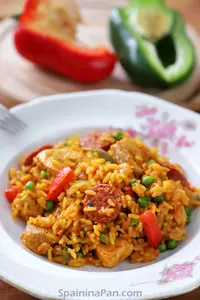
Spanish Chicken and Chorizo Paella Recipe | Easy & Flavorful
 Savor authentic flavors with this easy chicken and chorizo paella. Smoky chorizo, tender chicken, and saffron-infused rice.
 -
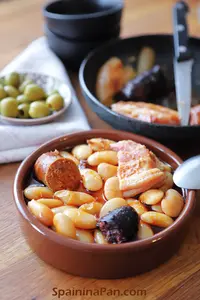
Best Fabada Recipe - Authentic Asturian Bean Stew
Discover the best fabada recipe: a rich, authentic Asturian bean stew with chorizo, morcilla and pork. Easy step-by-step guide for perfect results every time. -
Easy Spanish Chicken and Eggs Soup
A comforting Spanish chicken and eggs soup recipe. Simple ingredients, great flavor and ready in under an hour.


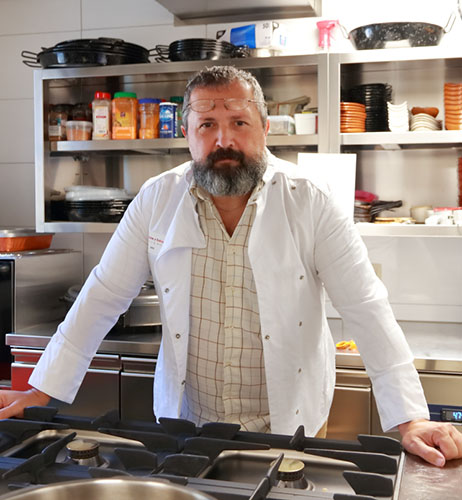
Hello there! I'm Edu, and I'm here to share my Spanish recipes for you to enjoy! As a cook, I love sharing my heritage through food, featuring the dishes our parents and grandparents made in Spain. From time to time, I still discover new culinary creations. Join me on this flavorful adventure and explore the delicious world of Spanish cuisine!