The Patatas Bravas Recipe with Tomato
(Patatas Bravas con Tomate)
By Edu Valor / Author - Spanish Chef
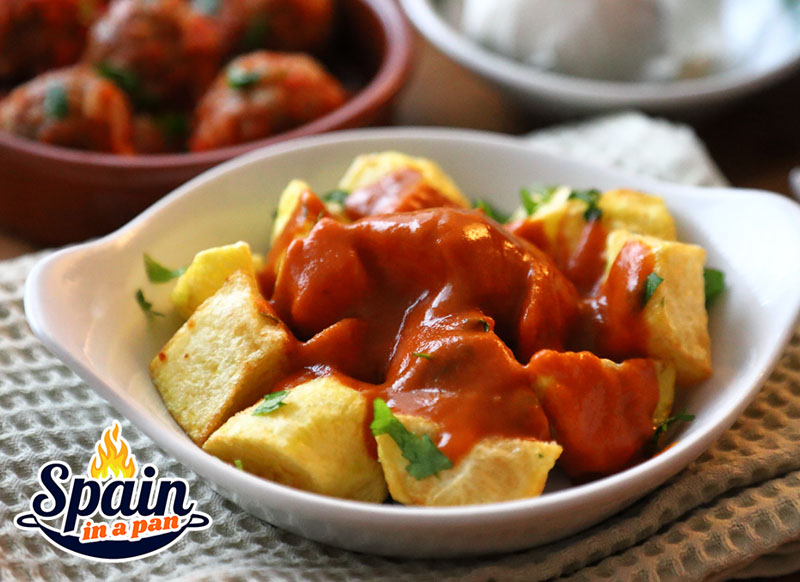
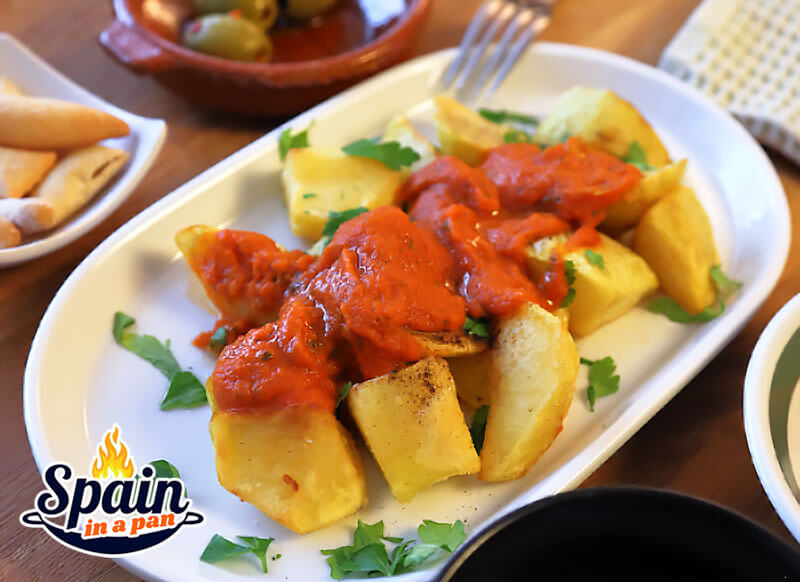
I love spicy food, so the patatas bravas with tomato recipe is right up my alley. Few dishes are this simple yet insanely popular, and Spain’s tapas culture probably has a lot to do with that.
The patatas bravas is most often served as tapas. Pair it with some meat, fish, or vegetables, and you’ve got yourself a full meal.
I enjoy the original paprika version too, but here you’ll find the tomato-based recipe. Scroll down—or jump straight to it.
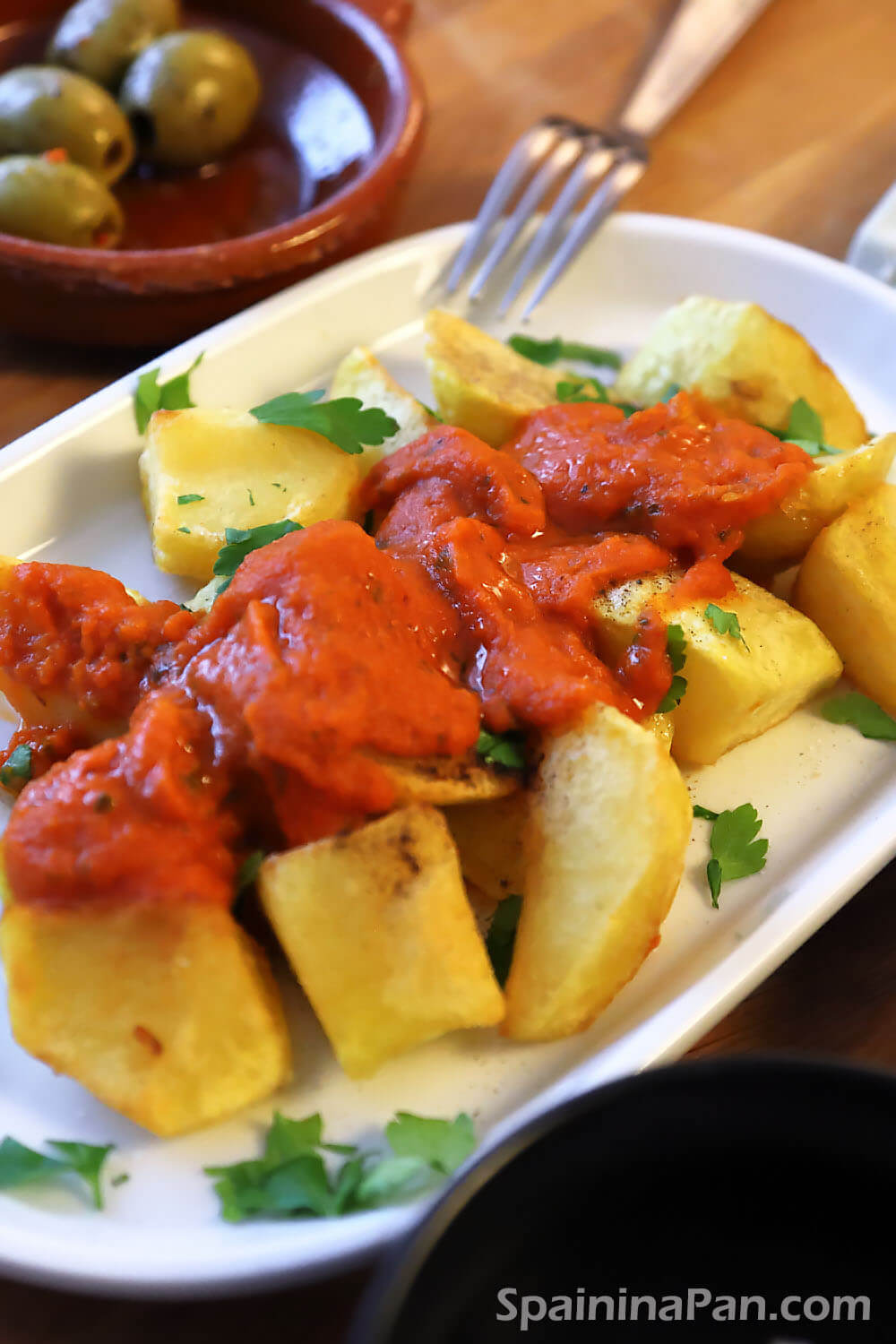
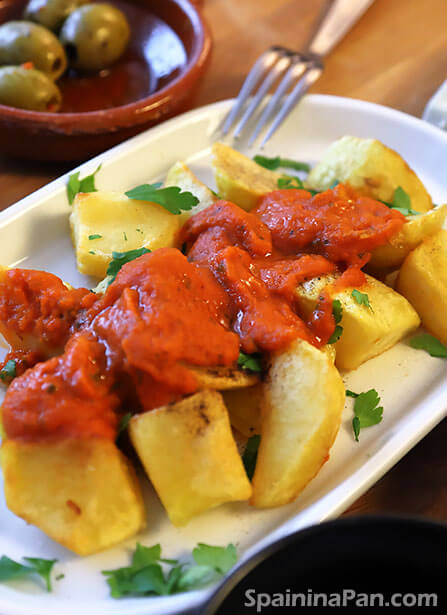
A quick potato dish like this always reminds me of Belgian fries with mayo. They’re endlessly popular, no matter which sauce you serve them with.
If you ask me, this is the ideal snack to share—perfect for a barbecue, a birthday, or any other excuse to get together with good company. The only concern is, can they handle the hot sauce?
Let's Make the Patatas Bravas with Tomato.
Ingredients for 4 Servings
Preparation: 10-15 minutes
Cooking: approx. 20 minutes
*Measurements in metric and USA Imperial system. For British/Canadian measurements please use the metric conversion calculator.
- 750 g / 1.5 lb floury potatoes, cut large chunks
- 1 onion, finely diced
- 2 garlic cloves, minced
- 1 tsp smoked paprika
- 200 g / 7 oz tomato puree
- 3 tbsp dry white wine
- 1 dry chili pepper crushed
- 1 tbsp chopped parsley
- Olive oil
- Salt
Step-by-Step Instructions
The Potatoes:
- Peel the potatoes and cut them into large chunks, roughly the size of a golf ball.
- Heat the oil to 150°C (300°F) and fry the potatoes for 6 minutes.
- Remove them from the oil and set aside to cool.
The Salsa Brava:
- Heat the olive oil in a pan over medium heat. Add the onion and cook until translucent.
- Stir in the garlic and the wine. Let it simmer for a couple of minutes to allow the alcohol to evaporate.
- Add the tomatoes, crushed chili pepper, paprika, and parsley. Simmer for about 10 minutes, adding a little water if the sauce becomes too thick.
- Transfer the mixture to a pitcher or measuring beaker and blend with an immersion (stick) blender until smooth.
- Season with salt to taste. The salsa brava should have a ketchup-like consistency—thin it with water or reduce it further as needed.
Finishing the Potatoes:
- Heat the oil to 180°C (356°F) and fry the potatoes again for 4–5 minutes, or until golden brown.
- Lightly season with salt and, if desired, a touch of white pepper.
-
Serve the potatoes with the salsa brava and garnish with chopped parsley.
TIPS:
- Fry the potatoes twice for extra crispiness.
- For a lower-fat alternative, consider boiling or baking them instead.
- Cut the potatoes into large chunks, about the size of a golf ball.
- The sauce should have the consistency of thick paint. Add water or reduce as needed to achieve the right texture.
- Add half a teaspoon of sugar and a few drops of vinegar to enhance the flavor.
What you Will Need
- Frying pan
- Sauce pan
- Stick blender
- Cooking thermometer
- Scale
- Measuring spoons
- Pitcher or measuring beaker
- Paring knife
- Cutting board
A Few Technique Ideas
For some things, I may look like I’m going against the grain cooking-wise. Take potatoes, for example. Plenty of recipes online call for waxy potatoes for this tapas dish.
Living in Belgium for so long (Fry country number 1) makes me question that approach—at least if you’re aiming for the best possible result.
There are a few considerations that can help sharpen your critical thinking when deciding whether certain techniques and ingredient choices are really necessary. Here we go:
- Choose starchy potatoes: Russets, sweet potatoes, Bintje, Goldrush, Patata Agria, Kennebec, and similar varieties work best. Wash them before peeling, and ensure your hands are clean as well. Peel and cut them into chunks. Avoid rinsing to keep the starch—it improves crispiness.
- Fry in two steps: First, fry at 150°C (300°F) for about 6 minutes. Let the potatoes cool while you prepare the sauce. Then fry again at 180°C (356°F) for around 4 minutes, or until golden brown. This technique significantly improves texture.
- Alternative cooking methods: Patatas bravas are traditionally fried in oil, but they can also be prepared as oven-baked fritters or even boiled. Air frying is another solid option when reducing fat is a priority. The potatoes in the photo below, for example, were baked in a 1800 W airfryer at 200°C (392°F) for 25 minutes.
- Add paprika before baking or air frying: Sprinkling paprika over the potato chunks before cooking enhances their appearance and adds a subtle smoky note.
I hope these techniques serve you well. Patatas bravas with tomato (or without) are real crowd-pleasers when cooked and presented properly. In this age of instant online comparisons, standing out matters—pale fried potatoes simply don’t look as appetizing.
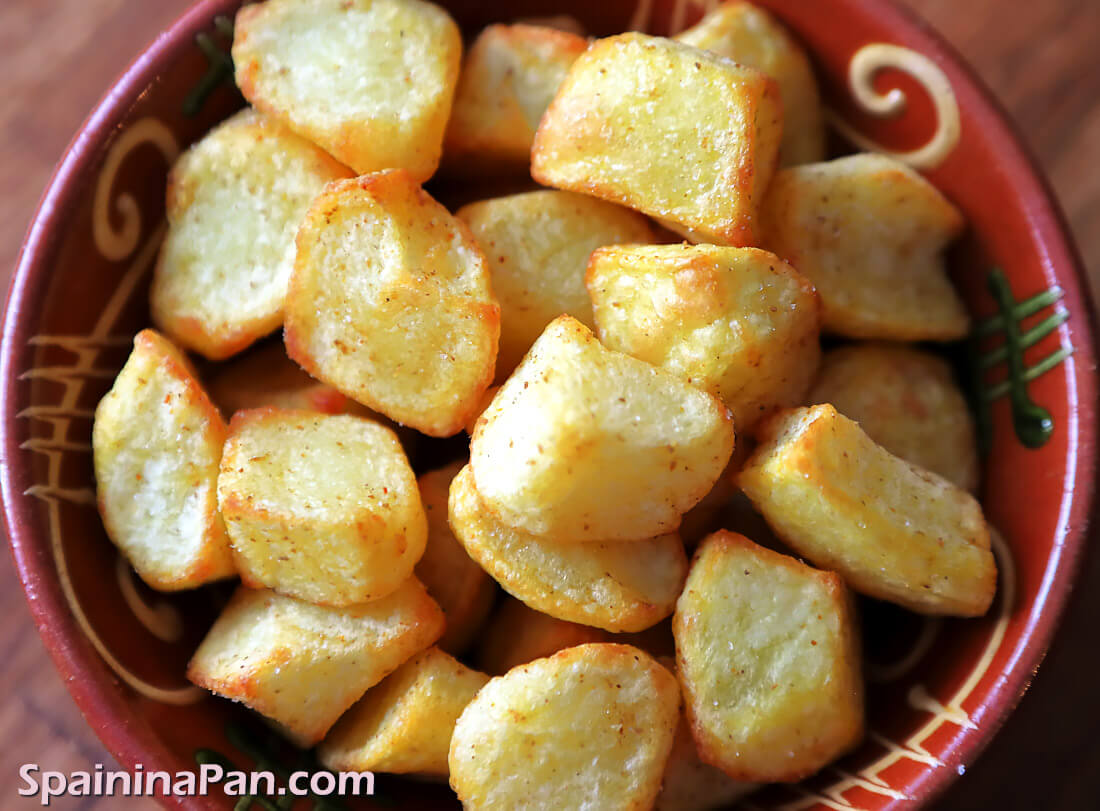 Air fryer patatas without brava sauce, crispy and low-fat.
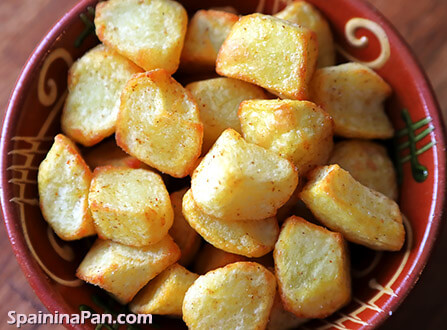 Air fryer patatas without brava sauce, crispy and low-fat.
A Typical Dish Originally from Spain
Patatas bravas are one of Spain’s most popular tapas, served in nearly every bar across the country.
They were created within bar culture as a way to offer a simple, affordable snack. The price tag was low, the fried potatoes were satisfying, and the spicy sauce sealed the deal.
While it’s unclear which bar invented these fritters, most Spaniards agree that Madrid is their birthplace.
Bars Casa Pellico and La Casona are often mentioned as the original creators. Their popularity remained strong from the 1960s onward, when patatas bravas really took off. Unfortunately, neither bar exists today.
For such an iconic dish, patatas bravas might seem ancient—but not quite. They’re actually a relatively modern recipe, dating back to the 1950s.
What started as a cost-effective business move quickly gained widespread fame. In 2008, a United Nations study officially recognized patatas bravas as a traditional Spanish dish, further solidifying Spain as the birthplace of this beloved recipe topped with its signature spicy red sauce.
When it comes to comparing the patatas bravas with tomato salsa, I have no preferred sauce. To me, either is traditional, nutrient-rich, and enjoyable!
*****
Edu's Hot Patatas Bravas Recipes
Recent Articles


-
Easy Spanish Chicken and Eggs Soup
 A comforting Spanish chicken and eggs soup recipe. Simple ingredients, great flavor and ready in under an hour.
 -
Spanish Scrambled Potatoes | Easy 20-Min Recipe
Spanish scrambled potatoes with a crispy, golden finish. This easy 20-minute recipe delivers natural, authentic flavor with simple ingredients. -
The Best Recipe for Torrijas from Spain!
Try the best recipe for torrijas from Spain. Learn how to make this classic treat at home in simple steps.



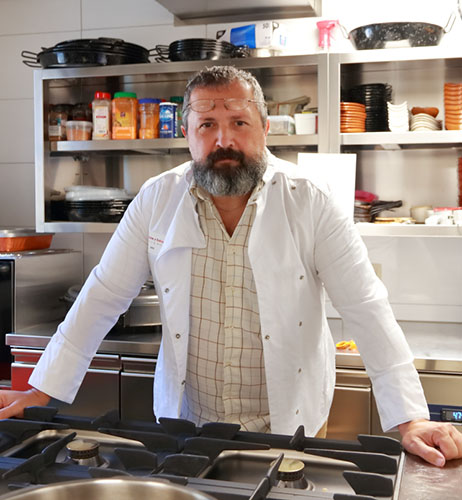
Hello there! I'm Edu, and I'm here to share my Spanish recipes for you to enjoy! As a cook, I love sharing my heritage through food, featuring the dishes our parents and grandparents made in Spain. From time to time, I still discover new culinary creations. Join me on this flavorful adventure and explore the delicious world of Spanish cuisine!